Medicaid Expansion 2026: Policy Shifts & Healthcare Access Impact

Medicaid Expansion 2026: How Recent Policy Shifts Impact Healthcare Access for Millions
The landscape of American healthcare is in a constant state of flux, driven by legislative changes, economic pressures, and evolving societal needs. Among the most significant ongoing discussions is the future of Medicaid, particularly as we look ahead to Medicaid Expansion 2026. This critical program, a cornerstone of the nation’s healthcare safety net, is continually shaped by policy decisions that have profound implications for millions of Americans. Understanding these shifts is not just an academic exercise; it directly affects access to vital medical services, financial stability for families, and the overall health of communities across the United States.
The Affordable Care Act (ACA) of 2010 introduced the option for states to expand Medicaid eligibility to nearly all non-elderly adults with incomes up to 138% of the federal poverty level. While this expansion has been adopted by many states, a significant number have yet to do so, creating a patchwork of coverage that leaves millions in a “coverage gap.” As we approach 2026, new discussions, potential legislative actions, and ongoing state-level considerations are poised to further redefine this critical program. This article will delve deep into the anticipated policy shifts surrounding Medicaid Expansion 2026, examining their potential impact on healthcare access, economic stability, and the lives of individuals and families nationwide.
Understanding the Foundation: What is Medicaid Expansion?
Before we project into Medicaid Expansion 2026, it’s essential to grasp the fundamentals of what Medicaid expansion entails. Historically, Medicaid provided healthcare coverage primarily to low-income children, pregnant women, individuals with disabilities, and some low-income parents. The ACA sought to broaden this scope significantly by allowing states to extend coverage to a new group: adults under age 65 without dependent children, and those previously ineligible due to income or categorical restrictions, provided their income fell below 138% of the federal poverty level. The federal government covers a substantial portion of the costs for this expansion population, initially 100% and gradually decreasing to 90% in subsequent years.
The rationale behind this expansion was clear: reduce the number of uninsured Americans, improve health outcomes by providing access to preventative care and chronic disease management, and alleviate the financial burden on individuals and hospitals that often absorbed the costs of uncompensated care. States that chose to expand saw significant reductions in their uninsured rates, improved access to primary care, and even economic benefits from federal funding inflows.
However, the decision to expand Medicaid has been a politically charged one, with arguments centered on state budgets, individual responsibility, and the role of government in healthcare. These debates continue to shape the current landscape and will undoubtedly influence the trajectory of Medicaid Expansion 2026. The varying approaches taken by states have created stark differences in healthcare access, leading to disparities that policy discussions in the coming years will inevitably address.
Current State of Medicaid Expansion: A Patchwork of Coverage
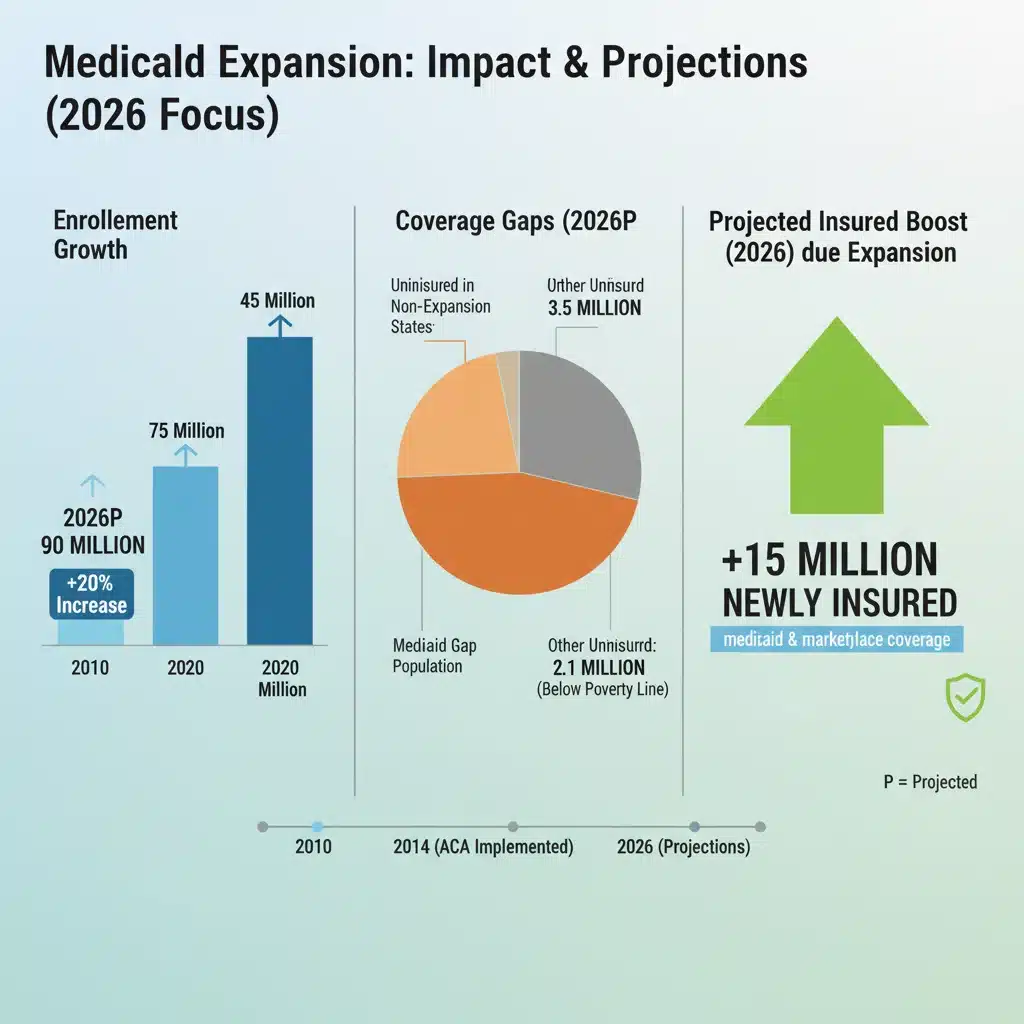
As of late 2023, 41 states and the District of Columbia have expanded Medicaid, while 10 states have not. This creates a complex and often inequitable system where an individual’s access to affordable healthcare can depend entirely on their zip code. In non-expansion states, many low-income adults earn too much to qualify for traditional Medicaid but too little to qualify for subsidies to purchase insurance through the ACA marketplaces, thus falling into the notorious “coverage gap.” This gap leaves millions without any viable pathway to affordable health insurance, often leading to delayed care, worsening health conditions, and medical debt.
The states that have expanded Medicaid have generally reported positive outcomes, including improved health status among beneficiaries, reduced hospital uncompensated care costs, and stronger rural hospital finances. For instance, studies have shown that expansion states experienced greater reductions in mortality rates for certain conditions compared to non-expansion states. This evidence forms a strong basis for advocates pushing for universal expansion and will be a key talking point in discussions leading up to Medicaid Expansion 2026.
Conversely, non-expansion states often cite concerns about the long-term financial sustainability for state budgets, despite the significant federal matching funds. They also raise philosophical objections to expanding government-funded healthcare. These arguments, while persistent, face increasing scrutiny as the economic and health disparities between expansion and non-expansion states become more pronounced. The pressure on these states to reconsider their stance is likely to intensify as federal incentives and public demand for broader coverage grow.
Key Policy Shifts Anticipated for Medicaid Expansion 2026
The period leading up to and including Medicaid Expansion 2026 is expected to be marked by several significant policy discussions and potential legislative changes. These shifts could come from various sources: federal legislative action, new administrative directives, or continued state-level movements.
Federal Incentives and Mandates
One major area of focus will likely be renewed federal efforts to encourage or even mandate the remaining non-expansion states to adopt Medicaid expansion. The American Rescue Plan Act of 2021 offered enhanced federal matching funds for states that newly expand Medicaid, providing a substantial financial incentive. While this led to some states reconsidering, others still held out. Future legislative packages could include even more attractive financial incentives or, more controversially, federal mandates tied to other funding streams.
There’s also the possibility of legislative efforts to “federalize” Medicaid expansion, meaning the federal government could take a more direct role in providing coverage in non-expansion states, bypassing state legislatures. Such a move would be highly contentious but could be considered if the coverage gap persists and political will aligns. The debate around these federal interventions will be central to the narrative of Medicaid Expansion 2026.
State-Level Referendums and Ballot Initiatives
In several non-expansion states, citizens have taken matters into their own hands through ballot initiatives and referendums. States like Maine, Idaho, Nebraska, Utah, and Missouri have all expanded Medicaid through voter-approved measures, often overcoming legislative resistance. This trend is likely to continue, with advocacy groups pushing for similar initiatives in other non-expansion states. The success of these grassroots efforts demonstrates a strong public appetite for expanded healthcare access, and more states could see Medicaid expansion on their ballots by 2026.
These state-level movements highlight the democratic process at work, allowing citizens to directly influence healthcare policy when their elected representatives are reluctant. The outcomes of these initiatives will be crucial indicators for the broader direction of Medicaid Expansion 2026 and beyond.
Post-Pandemic Realities and Public Health Demands
The COVID-19 pandemic exposed and exacerbated existing vulnerabilities in the U.S. healthcare system, particularly for the uninsured and underinsured. The pandemic underscored the importance of broad healthcare access for public health and economic stability. Many individuals lost employer-sponsored health insurance during economic downturns, further increasing the need for safety net programs like Medicaid.
This heightened awareness of public health needs and the economic consequences of widespread illness could fuel renewed calls for broader Medicaid expansion. Policymakers may feel increased pressure to ensure more robust coverage to better prepare for future public health crises. The lessons learned from the pandemic will undoubtedly inform policy discussions on Medicaid Expansion 2026, pushing for more comprehensive and resilient healthcare systems.
Impact on Healthcare Access for Millions
The implications of Medicaid Expansion 2026 policy shifts for healthcare access are profound and far-reaching. If more states expand or federal interventions broaden coverage, millions currently in the coverage gap could gain access to essential medical services.
Reduced Uninsured Rates and Improved Health Outcomes
The most immediate and direct impact of expanded Medicaid eligibility is a significant reduction in uninsured rates. When individuals gain coverage, they are more likely to seek timely medical care, including preventive services, screenings, and management of chronic conditions. This leads to improved health outcomes, earlier diagnosis of diseases, and better overall quality of life. For instance, studies have linked Medicaid expansion to reductions in emergency room visits for preventable conditions, increased use of primary care, and improved access to mental health and substance abuse treatment.
For individuals, this means less financial stress from medical bills, greater peace of mind, and the ability to live healthier, more productive lives. For communities, it means a healthier workforce, reduced burden on emergency services, and a stronger public health infrastructure. The promise of Medicaid Expansion 2026 is, at its core, the promise of better health for more people.
Addressing Health Disparities
Medicaid expansion has also been shown to reduce health disparities, particularly among racial and ethnic minority groups and low-income populations who disproportionately lack health insurance. By providing a pathway to coverage for these vulnerable populations, expansion can help address long-standing inequities in healthcare access and outcomes. This aspect is particularly critical in the context of broader social justice and equity movements.
Policy shifts in Medicaid Expansion 2026 that prioritize reaching underserved communities and ensuring equitable enrollment processes could further amplify these positive effects. This includes efforts to improve outreach, provide culturally competent care, and remove administrative barriers to enrollment.
Impact on Healthcare Providers and Hospitals
Hospitals and healthcare providers also stand to benefit significantly from broader Medicaid expansion. When more patients are insured, hospitals see a reduction in uncompensated care costs, which can be a major financial drain, especially for rural and safety-net hospitals. This financial stability allows hospitals to invest in facilities, technology, and staff, ultimately improving the quality and availability of care for everyone.
For individual providers, increased Medicaid enrollment means a larger patient base and more predictable reimbursement for services. This can be particularly impactful in areas with physician shortages, as it makes practicing in underserved communities more financially viable. The economic ripple effects of Medicaid Expansion 2026 on the healthcare industry itself are substantial, strengthening the entire system.
Challenges and Criticisms Ahead for Medicaid Expansion 2026
Despite the documented benefits, the path to broader Medicaid Expansion 2026 is not without its challenges and criticisms. These concerns, though often debated, are legitimate considerations for policymakers.
State Budget Concerns
The primary concern for non-expansion states remains the long-term financial commitment. While the federal government covers a large share of the expansion costs (90% for the expansion population), states are responsible for the remaining 10%. Critics argue that even this 10% can be a significant burden on state budgets, potentially diverting funds from other essential services. However, many studies have shown that the economic benefits of expansion, such as increased federal funding, job creation, and reduced uncompensated care, often outweigh the state’s share of costs.
As Medicaid Expansion 2026 approaches, discussions will continue around creative financing mechanisms and further federal incentives to alleviate these state budget concerns. Some states have explored unique approaches, such as imposing provider taxes, to generate the state’s share of funding.
Work Requirements and Eligibility Changes
Another area of potential policy shifts and contention revolves around eligibility requirements, particularly the implementation of work requirements for Medicaid beneficiaries. While federal courts have largely struck down attempts to impose work requirements, the debate is ongoing, and future administrations might seek new ways to introduce such stipulations. Proponents argue that work requirements promote self-sufficiency, while opponents contend they create unnecessary barriers to care for vulnerable individuals, often those already working or facing significant health challenges.
Any moves to reintroduce or modify work requirements could significantly impact the number of people covered by Medicaid Expansion 2026 and beyond, potentially reversing some of the gains in healthcare access. This will be a closely watched aspect of future Medicaid policy.
Administrative Burdens and Enrollment Challenges
Even in expansion states, administrative complexities and enrollment challenges can prevent eligible individuals from accessing coverage. Navigating the application process, understanding eligibility criteria, and completing necessary paperwork can be daunting, especially for those with limited literacy, language barriers, or unstable housing. Policy discussions for Medicaid Expansion 2026 will likely include efforts to streamline enrollment processes, improve outreach, and leverage technology to make access easier.
Ensuring that the benefits of expansion truly reach those they are intended for requires robust administrative support and continuous efforts to reduce barriers to enrollment and retention. This operational aspect is as crucial as the legislative decisions themselves.

The Road Ahead: What to Expect by 2026 and Beyond
The trajectory of Medicaid Expansion 2026 will be shaped by a confluence of political, economic, and social factors. The outcome of upcoming federal elections will undoubtedly play a significant role, as different administrations often have vastly different approaches to healthcare policy and the role of government safety nets.
Continued Advocacy and Public Pressure
Advocacy groups, healthcare organizations, and public health advocates will continue to exert pressure on non-expansion states and federal lawmakers to broaden Medicaid coverage. The compelling evidence of improved health outcomes and economic benefits in expansion states provides a strong foundation for these arguments. Public opinion, which increasingly favors broader healthcare access, will also be a potent force.
This sustained advocacy will be critical in keeping Medicaid Expansion 2026 at the forefront of policy discussions and ensuring that the needs of vulnerable populations are not overlooked.
Innovation in Healthcare Delivery
Beyond just enrollment, Medicaid Expansion 2026 will also coincide with ongoing innovations in healthcare delivery. Telemedicine, integrated care models, and a greater focus on social determinants of health are transforming how care is provided. Medicaid programs are increasingly incorporating these innovations to improve efficiency, access, and patient outcomes. Future policy shifts may further encourage or even mandate the adoption of these modern approaches, ensuring that expanded coverage translates into high-quality, accessible care.
The integration of behavioral health services, for example, is a growing area where Medicaid can play a pivotal role. As coverage expands, so too does the opportunity to address mental health and substance use disorders more comprehensively, leading to better overall community health.
Economic Implications
The economic impact of Medicaid Expansion 2026 extends beyond healthcare budgets. Increased federal funding flowing into states can stimulate local economies, create jobs in the healthcare sector, and reduce the financial strain on individuals who can then spend more on other goods and services. A healthier population is also a more productive workforce, contributing to overall economic growth.
Conversely, continued non-expansion in some states could mean foregoing billions in federal dollars, missing out on these economic benefits, and perpetuating a cycle of poorer health outcomes and higher uncompensated care costs. These economic arguments will remain central to the debate.
Conclusion: A Pivotal Moment for Healthcare Access
As we look towards Medicaid Expansion 2026, it’s clear that the nation stands at a pivotal moment in its ongoing effort to ensure comprehensive healthcare access for all its citizens. Recent policy shifts, whether driven by federal incentives, state-level referendums, or the lessons learned from global health crises, are all pushing towards a future where fewer Americans are left without essential medical coverage.
The potential for millions more to gain access to quality healthcare through Medicaid expansion is not just a statistical projection; it represents improved health outcomes, enhanced financial security, and a stronger social fabric for communities across the country. While challenges and criticisms persist, the overwhelming evidence of benefits, coupled with sustained advocacy and public demand, suggests a continued movement towards broader coverage.
Monitoring these developments and understanding their implications will be crucial for policymakers, healthcare providers, and the public alike. The decisions made regarding Medicaid Expansion 2026 will undoubtedly shape the health and well-being of the nation for years to come, moving us closer to a healthcare system that truly serves everyone.
Author