Adult Education 2026: Upskilling for Career Advancement

Rethinking Adult Education in 2026: 6 Pathways to Upskilling and Career Advancement
The year 2026 is not just around the corner; it’s already shaping the future of work, demanding a significant shift in how we approach adult education. The rapid pace of technological innovation, global economic shifts, and evolving societal needs mean that ‘lifelong learning’ is no longer a buzzword but a fundamental necessity. For adults seeking to remain relevant, advance their careers, or even transition into entirely new fields, understanding the pathways to effective upskilling and reskilling is paramount. This comprehensive guide will explore six critical avenues in adult education that are set to define success in 2026 and beyond.
The traditional model of education – a finite period of schooling followed by a long career – is obsolete. Today, continuous learning, particularly through adult education upskilling initiatives, is the cornerstone of professional resilience. Whether you’re a seasoned professional or just starting your journey, the ability to adapt, acquire new skills, and embrace change will be your most valuable asset. Let’s dive into how adult education is evolving and what opportunities it presents for your career advancement.
1. Micro-credentials and Stackable Certifications: The Agile Learning Approach
In an era where time is a precious commodity, lengthy degree programs can be impractical for working adults. This is where micro-credentials and stackable certifications emerge as powerful tools for adult education upskilling. These bite-sized, focused learning units allow individuals to acquire specific, in-demand skills without committing to a full degree. They are designed to be relevant, job-oriented, and often recognized by industry leaders.
What are Micro-credentials?
Micro-credentials are verified records of learning that demonstrate a specific skill, competency, or knowledge area. They can range from a few hours to several weeks of study and are typically offered by universities, vocational schools, and specialized online platforms. Examples include certifications in specific software (e.g., Python, Tableau), project management methodologies (e.g., Scrum, Agile), or digital marketing techniques (e.g., SEO, content strategy).
The Power of Stackable Certifications
Stackable certifications take the concept of micro-credentials a step further. They are a series of interconnected micro-credentials that, when combined, can lead to a larger qualification, such as an associate’s or bachelor’s degree, or a comprehensive professional designation. This “building block” approach allows learners to progressively build their expertise, earning recognition and career advantages at each stage. It provides flexibility, allowing individuals to pause and resume their learning journeys as life and career demands dictate.
Benefits for Adult Learners
- Targeted Skill Acquisition: Focus on exactly the skills needed for a specific role or industry.
- Faster Time to Value: Quickly acquire and apply new knowledge, seeing immediate career benefits.
- Flexibility: Learn at your own pace, often online, fitting education around existing commitments.
- Cost-Effective: Generally less expensive than full degree programs, offering a higher ROI for specific skill sets.
- Industry Recognition: Many micro-credentials are developed in partnership with industry, ensuring their relevance and acceptance by employers.
As we move into 2026, the demand for verifiable, specific skills will only intensify. Adult education upskilling through micro-credentials and stackable certifications offers an agile, efficient, and highly effective path to staying competitive in the job market.
2. AI-Powered Personalized Learning Paths: Tailoring Education to You
The “one-size-fits-all” approach to education is rapidly becoming a relic of the past, especially in adult education. Artificial intelligence (AI) is revolutionizing how adults learn by creating highly personalized and adaptive learning paths. AI algorithms can analyze a learner’s existing knowledge, learning style, pace, and career goals to recommend tailored content, resources, and exercises.
How AI Transforms Adult Education
- Adaptive Content Delivery: AI platforms can adjust the difficulty and presentation of material based on a learner’s performance, ensuring optimal engagement and comprehension. If a learner struggles with a concept, the AI can provide additional explanations, different examples, or supplementary resources.
- Skill Gap Identification: AI can pinpoint specific skill gaps a learner might have relative to their career aspirations or a target job role, then suggest precise modules or courses to bridge those gaps. This makes adult education upskilling incredibly efficient.
- Personalized Feedback: AI-powered tools can offer immediate and constructive feedback on assignments, quizzes, and even coding exercises, helping learners understand their mistakes and improve more quickly.
- Curated Resource Recommendations: Beyond structured courses, AI can recommend articles, videos, podcasts, and other learning materials that align with a learner’s interests and learning objectives.
- Career Pathing and Guidance: By analyzing market trends and individual skill sets, AI can offer insights into potential career trajectories and the specific adult education needed to achieve them.
Imagine an adult learner wanting to transition into data science. An AI-powered platform could assess their current programming knowledge, recommend specific Python or R modules, provide practice datasets, and even suggest projects to build a portfolio, all while adapting to their learning speed and availability. This level of personalization makes adult education far more effective and engaging, addressing the diverse needs and backgrounds of adult learners.
3. Immersive Learning Technologies: VR, AR, and Gamification
Beyond traditional textbooks and online videos, immersive learning technologies are poised to transform adult education upskilling by providing engaging, experiential learning environments. Virtual Reality (VR), Augmented Reality (AR), and sophisticated gamification techniques are moving beyond novelty to become powerful educational tools.
Virtual Reality (VR) in Training
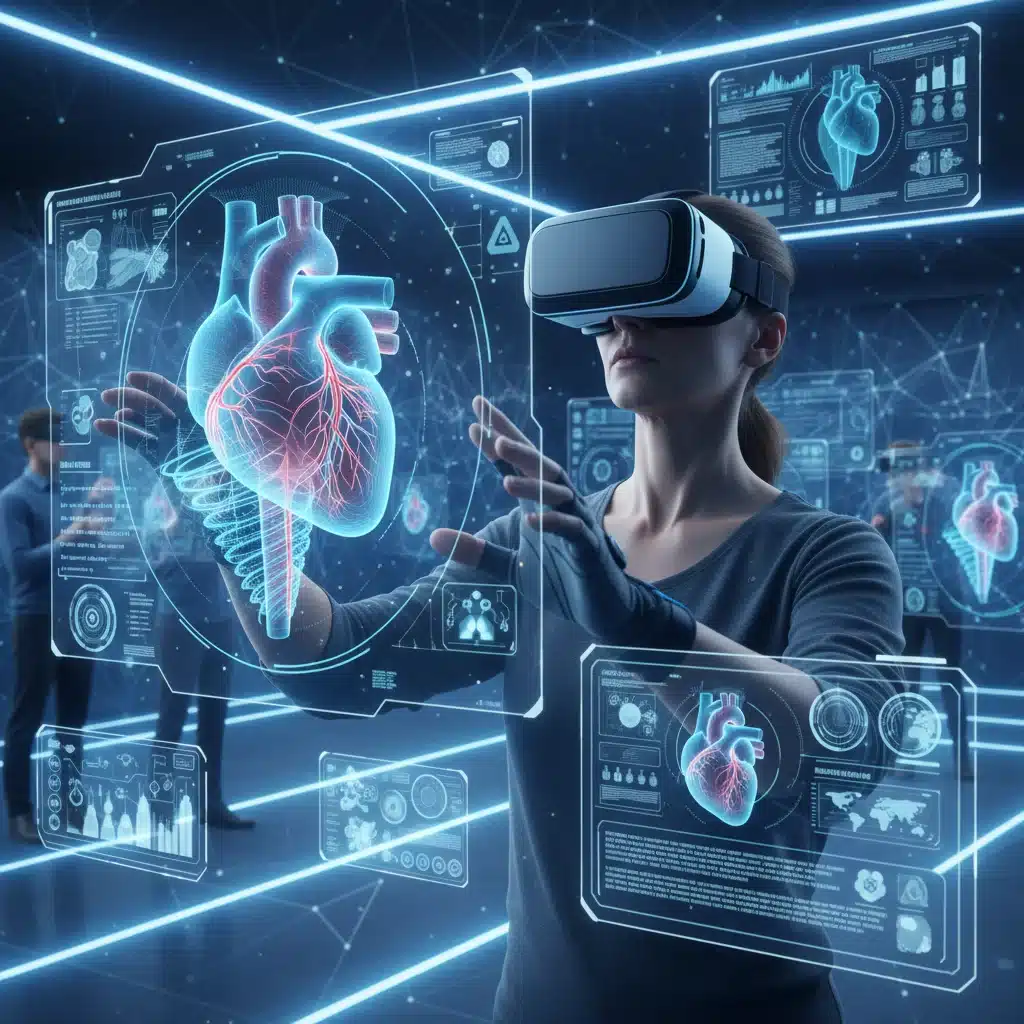
VR allows learners to step into simulated environments where they can practice complex tasks without real-world risks. This is particularly valuable for fields requiring hands-on experience, such as healthcare (surgical simulations), manufacturing (operating heavy machinery), emergency services (crisis response training), and even customer service (role-playing difficult customer interactions). The ability to fail safely, repeat scenarios, and receive immediate feedback makes VR an incredibly effective tool for skill development.
Augmented Reality (AR) for On-the-Job Learning
AR overlays digital information onto the real world, enhancing practical learning experiences. Imagine a technician repairing a complex machine using an AR headset that displays schematics, step-by-step instructions, and diagnostic information directly onto the equipment they are working on. AR can provide just-in-time learning and support, making adult education upskilling seamless and integrated into daily work.
Gamification for Engagement and Motivation
Gamification applies game-design elements and game principles in non-game contexts to engage users and solve problems. In adult education, this means incorporating points, badges, leaderboards, challenges, and narrative structures into learning modules. This approach taps into intrinsic motivators, making learning more enjoyable, fostering competition (healthy, of course!), and encouraging persistence. Gamified adult education platforms can significantly boost completion rates and knowledge retention.
Impact on Adult Education Upskilling
- Enhanced Retention: Experiential learning is far more memorable than passive learning.
- Safe Practice Environments: Learners can make mistakes without costly or dangerous consequences.
- Increased Engagement: Interactive and immersive experiences keep learners motivated.
- Accessibility: Simulations can be accessed anywhere, anytime, breaking down geographical barriers.
As the cost of VR/AR hardware decreases and software capabilities advance, these immersive tools will become increasingly central to effective adult education in 2026.
4. Collaborative Online Learning and Professional Networks: Learning Together
While technology enables personalized learning, it also fosters powerful collaborative environments. The future of adult education upskilling increasingly emphasizes learning within communities and professional networks. Online platforms are evolving to facilitate not just content delivery but also rich interactions, peer-to-peer learning, and mentorship opportunities.
The Rise of Cohort-Based Courses
Beyond self-paced online courses, cohort-based learning is gaining traction. In this model, a group of learners progresses through a course together, often with live sessions, group projects, and dedicated discussion forums. This fosters a sense of community, accountability, and shared learning, mimicking the dynamics of a traditional classroom but with the flexibility of online access.
Professional Learning Communities (PLCs)
PLCs are groups of professionals who meet regularly – virtually or in person – to share best practices, discuss challenges, and collectively learn new strategies. These informal yet highly effective networks are crucial for continuous adult education upskilling. They provide peer support, diverse perspectives, and opportunities for collaborative problem-solving that formal courses might not offer.
Mentorship and Coaching Platforms
Connecting experienced professionals with those seeking to grow is a cornerstone of effective adult education. Dedicated online platforms are emerging that facilitate mentorship and coaching relationships, allowing individuals to receive personalized guidance, career advice, and skill development support from industry experts. These relationships can be formal or informal, short-term or long-term, and are invaluable for navigating career transitions and accelerating growth.
Benefits of Collaborative Learning
- Diverse Perspectives: Learning from peers with different backgrounds and experiences.
- Networking Opportunities: Building valuable professional connections that can lead to new opportunities.
- Accountability and Motivation: Being part of a group can increase commitment and completion rates.
- Real-World Problem Solving: Collaborating on projects that simulate real-world challenges.
For adult education to be truly effective in 2026, it must not only deliver knowledge but also build robust communities that support ongoing learning and professional development.
5. Competency-Based Education (CBE): Proving What You Know
Competency-Based Education (CBE) is a flexible and personalized approach to adult education that focuses on demonstrating mastery of specific skills and knowledge rather than on seat time or credit hours. In a CBE model, learners advance once they prove they have mastered a competency, regardless of how long it took them to acquire it. This model is particularly well-suited for adult education upskilling, as it respects prior learning and allows individuals to progress at their own pace.
Key Principles of CBE
- Focus on Outcomes: The emphasis is on what a learner can actually do, not just what they have studied.
- Personalized Pacing: Learners can accelerate through familiar material and spend more time on challenging concepts.
- Assessment of Mastery: Evaluation is focused on demonstrating proficiency in specific competencies through projects, portfolios, and practical applications.
- Direct Relevance to Work: Competencies are often defined in collaboration with industry, ensuring they are directly applicable to job roles.
How CBE Supports Adult Education Upskilling
For adults re-entering the workforce, changing careers, or simply needing to update their skills, CBE offers several advantages:
- Recognition of Prior Learning: Existing skills and knowledge can be assessed and credited, reducing the need to re-learn familiar material.
- Efficient Skill Acquisition: Learners can focus precisely on the competencies they need to acquire, making their adult education upskilling efforts highly efficient.
- Clear Career Pathways: Competencies are often mapped directly to specific job roles and industry standards, providing clear guidance for career advancement.
- Flexible Scheduling: Many CBE programs are self-paced and online, making them accessible to adults with busy schedules.
By shifting the focus from “time spent” to “skills mastered,” CBE programs are becoming a cornerstone of effective adult education, particularly for those seeking tangible career outcomes in 2026.
6. “Learn-as-You-Go” Integrated Learning Platforms: Education Embedded in Workflows
The most seamless form of adult education upskilling is arguably the one that integrates directly into an individual’s daily workflow. “Learn-as-you-go” or embedded learning platforms are designed to provide relevant information and training precisely when and where it’s needed, minimizing disruption to productivity while maximizing knowledge acquisition.

What is Integrated Learning?
This approach involves embedding learning resources, tutorials, and micro-training modules directly within the software applications, tools, and systems that employees use daily. For example, if a sales professional needs to learn a new feature in their CRM software, the training module is accessible directly within the CRM itself, offering context-sensitive help and guided walkthroughs.
Examples and Applications
- In-App Tutorials: Interactive guides that pop up within software to explain new features or processes.
- Contextual Help Systems: AI-powered chatbots or knowledge bases that provide immediate answers to questions related to a specific task.
- Micro-Learning Modules: Short, focused videos or articles that address a particular skill gap or update, accessible on demand.
- Performance Support Tools: Digital assistants that guide users through complex tasks step-by-step.
Benefits for Adult Education Upskilling
- Just-in-Time Learning: Knowledge is acquired precisely when it’s needed, leading to higher retention and immediate application.
- Minimal Disruption: Learning is integrated into the workflow, reducing the need for dedicated training sessions that take employees away from their tasks.
- Increased Productivity: Employees can quickly find solutions and learn new skills without interrupting their work.
- Continuous Improvement: Fosters a culture of ongoing learning and adaptation within an organization.
By 2026, organizations will increasingly leverage these integrated learning platforms to ensure their workforce is continuously upskilled and adaptable. This approach makes adult education an inherent part of the work experience, rather than a separate activity.
The Future of Adult Education: A Holistic Perspective
These six pathways – micro-credentials, AI-powered personalization, immersive technologies, collaborative learning, competency-based education, and integrated learning platforms – are not mutually exclusive. In fact, the most effective adult education upskilling strategies in 2026 will likely combine elements from several of these approaches.
For individuals, this means taking a proactive role in curating their own learning journeys. It involves:
- Self-Assessment: Regularly evaluating current skills against future job market demands.
- Goal Setting: Defining clear career objectives and identifying the specific skills needed to achieve them.
- Exploration: Investigating various adult education options – online courses, bootcamps, certifications, professional networks, and employer-provided training.
- Adaptability: Being open to new learning methodologies and technologies.
- Networking: Building connections with peers and mentors to facilitate continuous learning and career growth.
For employers, investing in robust adult education programs is no longer a luxury but a strategic imperative. Companies that foster a culture of continuous learning and provide accessible upskilling opportunities will be better positioned to attract and retain top talent, innovate, and maintain a competitive edge. The “great resignation” and “great re-evaluation” have shown that employees prioritize development opportunities, making adult education a key component of employee value propositions.
The pace of change in the global economy is relentless. Technologies like artificial intelligence, automation, and big data are reshaping industries and creating new job categories while rendering others obsolete. This dynamic environment necessitates a workforce that is not only skilled but also agile and capable of continuous adaptation. Adult education, particularly through targeted upskilling, serves as the critical bridge between current capabilities and future demands.
Navigating the Upskilling Landscape in 2026
As you plan your adult education journey for 2026, consider these actionable steps:
- Identify In-Demand Skills: Research job market trends in your industry and adjacent fields. Look for skills repeatedly mentioned in job descriptions for roles you aspire to. LinkedIn Learning, Coursera, edX, and industry reports are excellent resources. Focus on “future-proof” skills like critical thinking, complex problem-solving, digital literacy, data analysis, and emotional intelligence.
- Assess Your Current Skill Set: Honestly evaluate your strengths and weaknesses. Where are your gaps compared to your desired career path? Many platforms offer skill assessments to help you pinpoint areas for development.
- Choose the Right Learning Format: Do you thrive in structured environments or prefer self-paced learning? Are you looking for a quick skill boost or a more comprehensive credential? Consider micro-credentials for specific skills, cohort-based courses for community, or integrated learning for on-the-job application.
- Leverage Employer-Provided Training: Many forward-thinking companies offer internal adult education upskilling programs or tuition reimbursement. Inquire about these opportunities and advocate for your learning needs.
- Build a Learning Network: Connect with peers, mentors, and industry experts. Participate in professional associations, online forums, and local meetups. Learning from others’ experiences and insights is invaluable for adult education.
- Embrace Technology: Don’t shy away from AI-powered tools or immersive learning experiences. These technologies are designed to make learning more efficient and engaging.
- Commit to Continuous Learning: Understand that upskilling is not a one-time event but an ongoing process. Schedule dedicated time for learning each week, even if it’s just an hour.
The landscape of adult education in 2026 is rich with opportunities for those willing to embrace change and commit to continuous growth. By strategically utilizing these six pathways, individuals can not only safeguard their careers but also unlock new potentials and contribute meaningfully to an ever-evolving world. The power of adult education upskilling lies in its ability to transform individuals, industries, and ultimately, society itself. Don’t just adapt to the future; actively shape it through strategic and continuous learning.
Conclusion: Your Future, Empowered by Adult Education
The year 2026 marks a pivotal moment for adult education, moving beyond traditional models to embrace dynamic, personalized, and technology-driven approaches. The six pathways we’ve explored – micro-credentials, AI-powered learning, immersive technologies, collaborative networks, competency-based education, and integrated learning platforms – collectively offer a robust framework for adult education upskilling and career advancement. These avenues empower individuals to acquire the specific, relevant skills needed to thrive in an increasingly complex and competitive job market.
For any adult seeking to enhance their professional trajectory, the message is clear: lifelong learning is no longer optional. It is the engine of personal and professional growth. By actively engaging with these innovative forms of adult education, you are not just keeping pace; you are positioning yourself as a leader, an innovator, and a resilient professional ready to tackle the challenges and opportunities of tomorrow. Embrace the journey of continuous learning, and unlock your full potential in 2026 and beyond.
Author