
The Impact of AI on K-12 Education in the US: A 2026 Outlook on Curriculum Integration
The landscape of education is undergoing a profound transformation, with Artificial Intelligence (AI) emerging as a pivotal force. As we look towards 2026, the integration of AI K-12 US education is not just a possibility but an impending reality. This article delves into the multifaceted impact of AI on K-12 education across the United States, exploring how it will reshape curricula, pedagogical approaches, and the very essence of learning. The rapid advancements in AI technology promise to revolutionize how students learn, how teachers teach, and how educational systems operate, making it imperative for stakeholders to understand and prepare for this shift.
The conversation around AI in education often conjures images of robotic tutors and automated grading systems. While these are certainly components, the true power of AI lies in its potential to personalize learning at an unprecedented scale, provide data-driven insights for educators, and create more engaging and accessible educational experiences. By 2026, we anticipate a significant acceleration in the adoption of AI tools and strategies within K-12 classrooms, driven by both technological readiness and a growing recognition of AI’s benefits. This will necessitate a comprehensive re-evaluation of current educational frameworks and a proactive approach to curriculum development that embraces AI as a partner in learning.
Understanding the Current State of AI in US K-12 Education
Before we project into 2026, it’s crucial to understand the current footprint of AI K-12 US education. While still in nascent stages for many districts, AI is already making inroads. We see early applications in adaptive learning platforms that adjust content difficulty based on student performance, intelligent tutoring systems offering real-time feedback, and administrative tools that streamline tasks like scheduling and attendance tracking. These initial implementations provide a glimpse into the potential for broader integration and the challenges that accompany it.
However, the current landscape is also characterized by significant disparities. Access to AI technologies and the expertise to implement them effectively often vary widely between affluent and underserved districts. Bridging this digital divide will be a critical challenge as we move towards more widespread AI adoption. Furthermore, there’s a need for greater awareness and professional development among educators to effectively leverage AI tools. Many teachers are still grappling with the basics of integrating technology, and AI presents a new layer of complexity that requires dedicated training and support.
The ethical implications of AI in education are also a growing concern. Issues around data privacy, algorithmic bias, and the potential for over-reliance on technology need careful consideration. As AI systems become more sophisticated, ensuring fairness, transparency, and accountability will be paramount. These foundational concerns must be addressed proactively to build trust and ensure that AI serves as an equitable and beneficial tool for all students.
Curriculum Integration: The Core of AI’s Impact by 2026
By 2026, the integration of AI K-12 US into the curriculum is expected to move beyond isolated tools to become a more systemic part of the learning experience. This doesn’t mean simply adding AI as a subject; rather, it implies using AI to enhance existing subjects and introduce new competencies essential for the future workforce. Imagine history lessons augmented with AI that allows students to interact with historical figures, or science experiments simulated in virtual environments driven by AI algorithms.
Personalized Learning Pathways
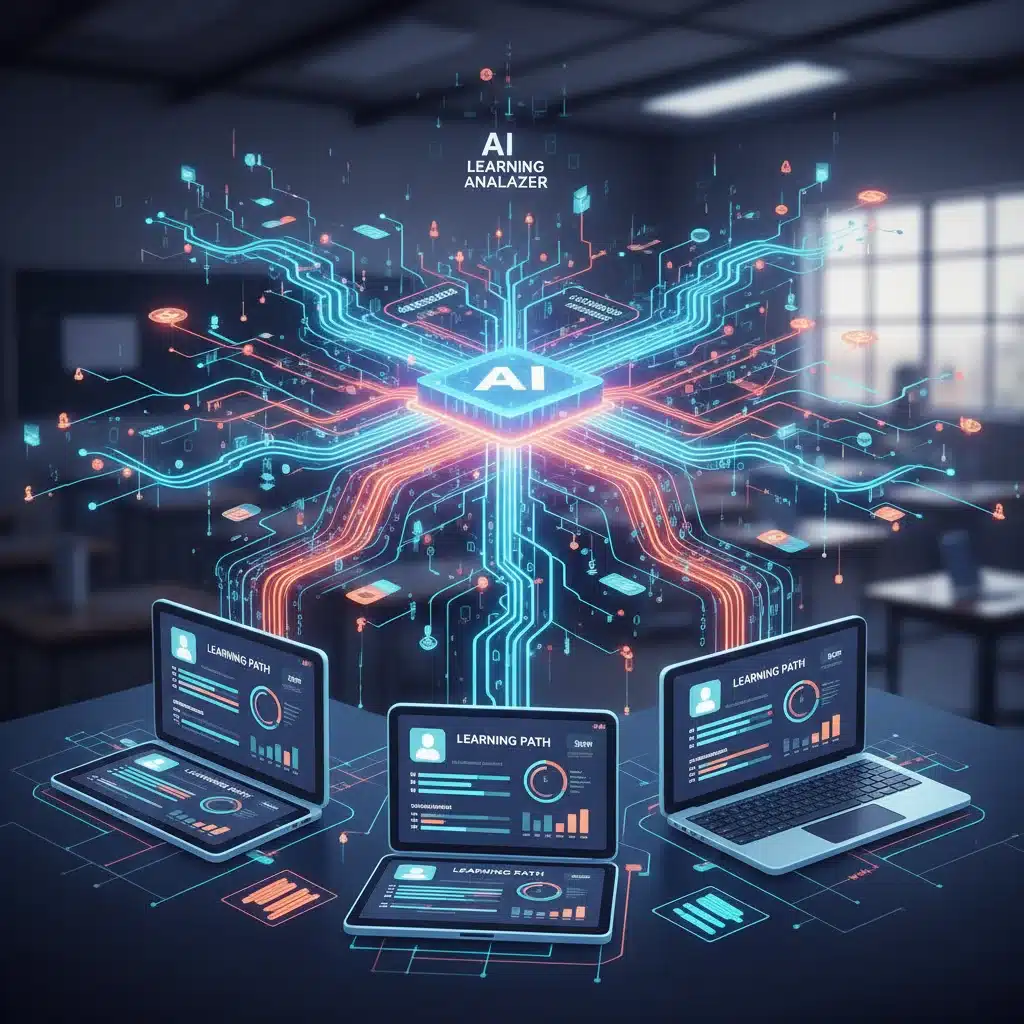
One of the most transformative aspects of AI integration will be the widespread adoption of personalized learning pathways. AI algorithms can analyze vast amounts of student data – performance, learning styles, engagement levels, and even emotional states – to tailor educational content and pace to individual needs. This moves away from the ‘one-size-fits-all’ model, allowing students to learn at their own speed and focus on areas where they need the most support or challenge. For example, an AI system could identify that a student struggles with a particular math concept and then provide targeted exercises, alternative explanations, or even connect them with a virtual tutor.
This level of personalization can significantly improve student outcomes, boost engagement, and foster a deeper understanding of subjects. It empowers students to take more ownership of their learning journey, providing them with agency and choice. Furthermore, it allows educators to spend less time on rote instruction and more time on high-value activities like mentorship, critical thinking, and addressing individual student challenges. The goal is not to replace teachers but to augment their capabilities, enabling them to be more effective and responsive to the diverse needs of their classrooms.
Developing AI Literacy and Computational Thinking
Beyond using AI as a tool, students will also need to understand AI itself. By 2026, curriculum updates will likely include a stronger emphasis on AI literacy and computational thinking. This means teaching students not just how to use AI applications, but also how AI works, its capabilities, its limitations, and its societal implications. Understanding concepts like machine learning, data ethics, and algorithmic bias will become as fundamental as traditional literacy and numeracy.
Introducing coding and basic AI principles at an early age can foster problem-solving skills, critical thinking, and creativity. Students might learn to train simple AI models, understand how data influences AI decisions, or even design their own AI-powered projects. This prepares them not just for careers in technology, but for an AI-driven world where understanding these concepts will be crucial for informed citizenship and effective participation in society. The aim is to empower the next generation to be creators and critical consumers of AI, rather than passive users.
Rethinking Assessment and Feedback
AI will also profoundly impact assessment and feedback mechanisms. Automated grading systems, particularly for objective questions, are already in use, but AI’s potential goes much further. By 2026, AI could provide sophisticated, real-time feedback on complex assignments, identify patterns in student errors, and even suggest interventions before problems become entrenched. Imagine an AI system analyzing a student’s essay not just for grammar, but for logical coherence, argumentative strength, and originality, offering specific suggestions for improvement.
This shift will free up significant teacher time, allowing them to focus on qualitative feedback, individualized support, and fostering higher-order thinking skills. AI-powered analytics can also provide educators with a comprehensive view of student progress, highlighting areas where entire classes or specific groups might be struggling, enabling more targeted and effective instruction. The data generated by AI can inform pedagogical decisions, curriculum adjustments, and resource allocation, leading to a more responsive and adaptive educational system.
The Evolving Role of Educators in an AI-Powered Classroom
The integration of AI K-12 US will not diminish the role of educators; rather, it will transform it. By 2026, teachers will evolve from primary disseminators of information to facilitators of learning, mentors, and designers of AI-enhanced educational experiences. Their expertise will be crucial in curating AI tools, interpreting AI-generated data, and guiding students through complex, AI-driven learning environments.
From Instructor to Facilitator
With AI handling more of the rote instructional tasks and providing personalized content, teachers can shift their focus to facilitating deeper learning. This means fostering critical thinking, creativity, collaboration, and problem-solving skills – competencies that AI cannot replicate. Educators will spend more time engaging students in discussions, guiding project-based learning, and addressing the social-emotional needs of their students. The human element of teaching, empathy, inspiration, and mentorship, will become even more central.
Furthermore, teachers will be instrumental in helping students navigate the vast amount of information and tools available through AI. They will teach students how to critically evaluate AI-generated content, understand its limitations, and use AI responsibly and ethically. This requires a new set of skills for educators, emphasizing pedagogical innovation and technological fluency.
Professional Development and Training
To meet these evolving demands, robust professional development and ongoing training for educators will be paramount. By 2026, school districts will need to invest heavily in equipping teachers with the knowledge and skills to effectively integrate AI into their classrooms. This includes understanding various AI tools, interpreting data analytics, recognizing ethical considerations, and adapting teaching methodologies.
Training programs should not just focus on technical proficiency but also on pedagogical strategies for an AI-enhanced environment. This includes learning how to design lessons that leverage AI for personalized learning, how to foster AI literacy in students, and how to balance human interaction with technological support. Ongoing support, communities of practice, and access to expert resources will be vital for successful implementation and sustained growth in this rapidly changing field.

Challenges and Ethical Considerations for AI in K-12 US Education
While the potential benefits of AI K-12 US are immense, its integration is not without significant challenges and ethical considerations that must be proactively addressed by 2026.
Data Privacy and Security
The use of AI in education involves collecting and analyzing vast amounts of student data. Ensuring the privacy and security of this sensitive information is a paramount concern. Robust data governance policies, transparent data usage practices, and secure technological infrastructures are essential to protect student confidentiality. Parents and students need to be informed about what data is collected, how it’s used, and who has access to it. Building trust in AI systems requires a commitment to ethical data handling.
Schools must also navigate compliance with regulations like COPPA (Children’s Online Privacy Protection Act) and FERPA (Family Educational Rights and Privacy Act), which govern student data. As AI technologies evolve, these regulations may need to be updated to adequately address new forms of data collection and algorithmic processing. Proactive measures to safeguard data will be crucial for widespread acceptance and successful implementation of AI in education.
Algorithmic Bias and Equity
AI algorithms are trained on data, and if that data is biased, the AI’s outputs will also be biased. This could perpetuate or even exacerbate existing educational inequities. For example, an AI system trained predominantly on data from a specific demographic might not perform as effectively or fairly for students from different backgrounds. Ensuring equitable outcomes requires careful attention to the datasets used to train AI, ongoing auditing of AI performance for bias, and a commitment to developing AI solutions that are inclusive and culturally responsive.
Addressing algorithmic bias is not just a technical challenge but a societal one. It requires diverse teams in AI development, ethical guidelines for AI design, and continuous vigilance from educators and policymakers to ensure that AI serves all students fairly. The goal should be to use AI to reduce educational disparities, not to amplify them.
Digital Divide and Access
The digital divide remains a significant barrier to equitable AI integration. Students in underserved communities may lack access to reliable internet, suitable devices, or the foundational digital literacy skills necessary to interact with AI tools. As AI becomes more central to learning, this divide could widen, creating further educational inequities.
Addressing this requires concerted efforts from government, educational institutions, and private industry to ensure equitable access to technology and digital resources. This includes investing in infrastructure, providing devices, and offering support services to bridge the gap. Without universal access, the transformative potential of AI in K-12 education will remain out of reach for many students.
Over-reliance on Technology and Human Connection
While AI offers incredible benefits, there’s a risk of over-reliance on technology, potentially diminishing the crucial role of human connection and social interaction in learning. Education is not just about acquiring knowledge; it’s also about developing social-emotional skills, empathy, and the ability to collaborate effectively with others. AI should augment, not replace, these vital human elements.
Educators must strike a balance, leveraging AI for efficiency and personalization while intentionally fostering opportunities for human interaction, peer collaboration, and teacher-student mentorship. The classroom environment should remain a space for social learning, critical dialogue, and the development of interpersonal skills that are indispensable for life and work. The thoughtful integration of AI ensures that technology serves human learning goals, rather than dictating them.
Preparing for 2026: Recommendations for Stakeholders
To effectively navigate the impact of AI K-12 US by 2026, various stakeholders must take proactive steps:
For Policymakers and Government Agencies:
- Develop National AI in Education Strategy: Create a comprehensive national strategy outlining goals, funding mechanisms, and ethical guidelines for AI integration in K-12.
- Invest in Infrastructure and Access: Fund initiatives to ensure equitable access to technology and high-speed internet for all students and schools, especially in rural and underserved areas.
- Update Data Privacy Regulations: Review and update existing privacy laws (like FERPA and COPPA) to specifically address AI-driven data collection and usage in educational settings.
- Support Research and Development: Fund research into effective and equitable AI applications for K-12 education, focusing on evidence-based practices.
For School Districts and Administrators:
- Prioritize Professional Development: Allocate significant resources for ongoing, high-quality professional development programs for teachers and administrators on AI literacy, pedagogical integration, and ethical use.
- Develop AI Integration Roadmaps: Create clear, phased plans for integrating AI into curricula, considering infrastructure, teacher readiness, and student needs.
- Establish Ethical AI Use Policies: Implement clear policies regarding data privacy, algorithmic bias, and responsible use of AI tools within the district.
- Foster Partnerships: Collaborate with technology providers, universities, and research institutions to pilot new AI tools and share best practices.
For Educators:
- Embrace Lifelong Learning: Actively seek out professional development opportunities related to AI and technology.
- Experiment and Innovate: Explore and experiment with AI tools in your classroom, sharing successes and challenges with colleagues.
- Advocate for Resources: Communicate needs for AI tools, training, and support to school and district leadership.
- Focus on Human-Centric Skills: Emphasize critical thinking, creativity, collaboration, and social-emotional learning, which are enhanced by AI but remain uniquely human.
For Parents and Communities:
- Stay Informed: Learn about how AI is being used in your children’s schools and its potential benefits and risks.
- Engage in Dialogue: Participate in school discussions and provide feedback on AI integration plans.
- Advocate for Ethical Use: Support policies that prioritize student data privacy, equity, and responsible AI implementation.
Conclusion: A Future Shaped by AI and Human Ingenuity
The year 2026 marks a significant milestone in the journey of AI K-12 US education. We are on the cusp of a transformative era where AI will no longer be a peripheral tool but an integral component of the learning ecosystem. From personalized learning pathways and enhanced assessment to the development of critical AI literacy, the impact will be profound and far-reaching. While challenges related to equity, privacy, and ethical implementation remain, a proactive and collaborative approach from all stakeholders can ensure that AI serves as a powerful force for good.
The future of K-12 education in the US is one where AI and human ingenuity converge, creating richer, more engaging, and more equitable learning experiences for every student. By embracing this future with thoughtful planning, continuous adaptation, and a strong ethical framework, we can prepare the next generation not just to navigate an AI-driven world, but to shape it for the better. The journey to 2026 is an exciting one, full of potential to redefine what’s possible in education, empowering students and educators alike for the challenges and opportunities of the 21st century.