Housing Assistance Programs 2025: Section 8 Vouchers & Deadlines
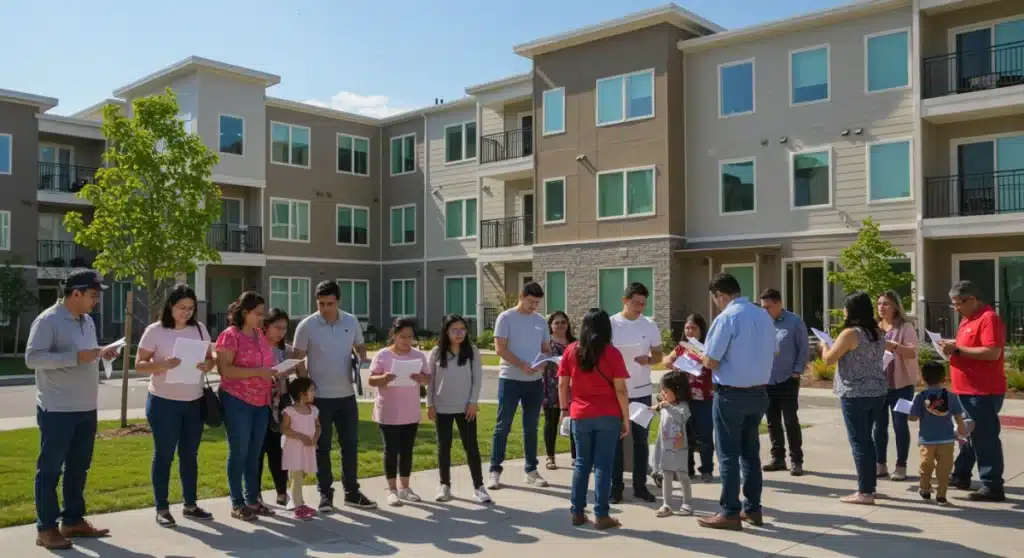
Understanding housing assistance programs for 2025 is crucial for individuals and families seeking affordable housing, with Section 8 voucher availability and application deadlines being key considerations for future planning.
As we approach 2025, the landscape of housing assistance programs continues to evolve. For many Americans, securing safe, affordable housing remains a significant challenge. This article will delve into housing assistance programs for 2025, with a particular focus on the Section 8 Housing Choice Voucher program, offering insights into its availability, application processes, and critical deadlines. Understanding these programs is vital for those seeking support and for communities striving to address housing insecurity.
understanding the section 8 housing choice voucher program
The Section 8 Housing Choice Voucher program is the federal government’s largest program for assisting very low-income families, the elderly, and the disabled to afford decent, safe, and sanitary housing in the private market. This program is administered by local public housing agencies (PHAs) and provides rental subsidies directly to landlords on behalf of eligible participants. The goal is to ensure that families are not forced to pay more than 30% of their adjusted gross income for rent and utilities.
While the program’s fundamental structure is set federally, its implementation and specific rules can vary significantly from one PHA to another. This local variation is a critical element for applicants to understand, as it directly impacts eligibility, waiting list management, and the overall application experience. Staying informed about your local PHA’s specific guidelines is paramount when seeking Section 8 assistance.
eligibility requirements for section 8
Eligibility for the Section 8 program is primarily based on income and family size. Generally, a family’s income must not exceed 50% of the median income for the county or metropolitan area in which the family chooses to live. However, by law, 75% of new vouchers issued each year must go to families whose incomes do not exceed 30% of the area median income. Beyond income, other factors also play a role in determining eligibility.
- Income Limits: These are set by HUD annually and vary by location.
- Family Status: Eligibility extends to families, elderly individuals, and persons with disabilities.
- Citizenship/Immigration Status: Applicants must be U.S. citizens or have eligible immigration status.
- Background Checks: PHAs conduct checks for criminal history and prior evictions due to lease violations.
Understanding these core requirements is the first step in assessing your potential for qualifying for the Section 8 program. It’s advisable to check the specific income limits for your area through your local PHA’s website or by contacting them directly, as these figures are subject to annual adjustments and regional differences.
In conclusion, the Section 8 program offers a crucial lifeline for many struggling to afford housing. Its federal framework combined with local administration means that while the core purpose is consistent, the practicalities of application and eligibility require close attention to local PHA details. Eligibility hinges on income, family status, citizenship, and background checks, all of which are carefully reviewed during the application process.
navigating section 8 voucher availability in 2025
The availability of Section 8 vouchers is often a significant concern for potential applicants. Unlike some other assistance programs, Section 8 is not an entitlement program, meaning that not everyone who is eligible will receive assistance. Funding limitations mean that PHAs often have long waiting lists, and many are even closed to new applications for extended periods. This makes understanding the dynamics of voucher availability crucial for anyone hoping to secure this vital support in 2025.
Voucher availability depends heavily on federal funding allocations to HUD, which then distributes funds to local PHAs. Economic conditions and policy changes at a national level can influence the number of vouchers available. Locally, factors such as the number of families already receiving assistance, the rate at which current participants move off the program, and local housing market conditions also play a role in determining when and if waiting lists open.
strategies for finding open waiting lists
Given the often-limited availability, a proactive approach is essential for finding open Section 8 waiting lists. Many PHAs have their own websites where they announce when their waiting lists will open. Some also use local media or community outreach programs to inform the public. It’s not uncommon for waiting lists to open for very brief periods, sometimes just a few days, making timely information critical.
- PHA Websites: Regularly check the websites of Public Housing Agencies in your desired areas.
- HUD Website: The HUD website provides links to local PHAs and sometimes offers general announcements.
- Local Housing Resources: Community centers, homeless shelters, and non-profit housing organizations often have updated information.
- Alert Services: Some websites and organizations offer email or text alerts when waiting lists open in specific regions.
It is important to cast a wide net and consider applying to multiple PHAs if you are willing to relocate, as waiting list lengths can vary dramatically from one jurisdiction to another. Some PHAs prioritize local residents, while others do not, so understanding these nuances can also be beneficial.
In summary, Section 8 voucher availability for 2025 will continue to be a challenge due to funding constraints and high demand. Proactive research and diligent monitoring of PHA announcements are key strategies for potential applicants. Utilizing various online and community resources will increase your chances of finding an open waiting list and successfully applying for assistance.
application deadlines and how to prepare for 2025
For those seeking housing assistance programs for 2025, understanding application deadlines is paramount. Unlike a fixed annual cycle, Section 8 application deadlines are highly variable and depend entirely on when individual Public Housing Agencies (PHAs) open their waiting lists. There isn’t a single national deadline, which means applicants must be vigilant and prepared to act quickly when an opportunity arises. The process often begins with an initial application to be placed on a waiting list, which can sometimes be years long.
Preparation is key, even before a waiting list opens. Gathering necessary documents and understanding the application process in advance can significantly reduce stress and increase the likelihood of a successful submission. Many PHAs have moved towards online application portals, which require internet access and basic computer literacy. Familiarizing yourself with these digital platforms can be a major advantage when a window for application opens.
essential documents for your application
When a Section 8 waiting list opens, you will typically need to provide a range of documents to verify your eligibility. Having these documents ready and organized can save valuable time and prevent delays. While specific requirements can vary by PHA, there is a common set of documents that nearly all agencies will request during the application process.
- Proof of Identity: Photo ID for all adult household members (driver’s license, state ID).
- Social Security Cards: For all household members.
- Birth Certificates: For all household members.
- Proof of Income: Pay stubs, benefit statements (Social Security, SSI, TANF), unemployment letters, child support orders.
- Asset Information: Bank statements, retirement accounts.
- Proof of Residency: Utility bills, lease agreements (if applicable).
- Disability Verification: Doctor’s letters or official documentation, if applicable.
It is highly recommended to create a dedicated folder, either physical or digital, where all these documents are securely stored and easily accessible. Photocopies or scanned versions are often sufficient for initial applications, but original documents may be required for verification at later stages. Being prepared with this information ensures that when a PHA announces an open waiting list, you are ready to submit your application without delay.

To conclude, successful navigation of Section 8 application deadlines in 2025 demands constant vigilance and thorough preparation. Since deadlines are set locally and often open unexpectedly, having all necessary documentation ready beforehand is crucial. This proactive approach will position you favorably when a Public Housing Agency opens its waiting list for new applicants.
other vital housing assistance programs for 2025
While the Section 8 Housing Choice Voucher program is widely known, it is not the only option for individuals and families seeking housing assistance programs for 2025. A variety of other federal, state, and local programs exist, each designed to address specific housing needs or serve particular populations. Exploring these alternatives can provide additional avenues for support, especially if Section 8 waiting lists are closed or extremely long in your area.
These programs often complement each other or cater to different circumstances, such as providing emergency rental assistance, support for first-time homebuyers, or specialized housing for veterans or the homeless. Understanding the scope and eligibility requirements of these diverse programs can help you find the best fit for your situation. It’s important not to put all your hopes on a single program but to explore all available resources.
diverse housing support initiatives
Beyond Section 8, several other programs offer critical housing support. These initiatives range from direct financial aid to services that help stabilize housing situations.
- Emergency Rental Assistance Programs (ERAP): Often funded federally but administered locally, these programs provide funds to help eligible households pay rent and utility arrears, as well as future rent payments.
- Public Housing: Directly owned and managed by PHAs, public housing offers affordable rental units to low-income families, the elderly, and persons with disabilities.
- Low-Income Housing Tax Credit (LIHTC) Program: This program encourages the development of affordable rental housing by providing tax credits to developers. Tenants in LIHTC properties pay reduced rents based on their income.
- Homeless Assistance Programs: These include Continuum of Care (CoC) programs, Emergency Solutions Grants (ESG), and rural housing stability programs, all aimed at preventing and ending homelessness through various services and housing interventions.
- Veterans Affairs Supportive Housing (VASH): A joint program between HUD and the VA, providing rental assistance to homeless veterans and their families.
Each of these programs has its own set of eligibility criteria and application processes, which means diligent research is required. Many local governments and non-profit organizations also run their own housing support initiatives, so connecting with local community resources can uncover additional opportunities. These localized programs are often designed to address specific needs within a particular city or county.
In conclusion, while Section 8 is a cornerstone, numerous other housing assistance programs are available for 2025. From emergency rental aid to specific support for veterans or those experiencing homelessness, a comprehensive search across federal, state, and local initiatives can significantly broaden your options for securing stable and affordable housing. Diversifying your search beyond Section 8 is a smart strategy.
the role of public housing agencies (phas)
Public Housing Agencies (PHAs) are central to the administration of most housing assistance programs for 2025, particularly the Section 8 Housing Choice Voucher program. These local entities act as the frontline administrators, bridging federal policies with community needs. Their role extends beyond merely processing applications; they are responsible for managing waiting lists, determining eligibility, conducting inspections, and ensuring compliance with federal regulations. Understanding the functions of your local PHA is crucial for anyone engaging with housing assistance.
PHAs operate under the guidance of the U.S. Department of Housing and Urban Development (HUD) but maintain a degree of autonomy in their operational procedures. This means that while the core rules of programs like Section 8 are consistent nationwide, the specific application processes, preferences for waiting lists, and even the resources available to voucher holders can differ. Therefore, direct engagement with your local PHA is often the most reliable way to obtain accurate and up-to-date information.
connecting with your local pha
Establishing contact and understanding the specific operational procedures of your local PHA is a critical step in navigating housing assistance. Many PHAs offer various channels for communication and information dissemination.
- Official Websites: Most PHAs maintain comprehensive websites detailing their programs, eligibility, application status, and waiting list openings.
- Direct Phone Lines: Contact numbers are typically available for general inquiries or specific departmental questions.
- In-Person Offices: While online applications are common, some PHAs still offer in-person assistance or have reception areas for questions.
- Community Outreach: PHAs often partner with local non-profits and community organizations to provide information and assistance to potential applicants.
When contacting a PHA, it is advisable to have your questions prepared and any relevant personal information (like potential income figures or family size) at hand. Be patient, as PHAs often handle a high volume of inquiries. Keep records of your interactions, including dates, names of representatives, and any advice given, as this can be valuable if questions or issues arise later in your application journey.
In conclusion, Public Housing Agencies are the indispensable local administrators of housing assistance programs. Their role is multifaceted, from managing applications to ensuring program compliance. Successful engagement with these programs, particularly Section 8, hinges on effectively connecting with and understanding the specific procedures of your local PHA.
challenges and future outlook for housing assistance in 2025
The landscape of housing assistance programs for 2025 is marked by both persistent challenges and potential for future evolution. While these programs provide vital support, they also face significant hurdles, including chronic underfunding, high demand, and the complexities of administering diverse initiatives. Understanding these challenges is crucial for setting realistic expectations and for advocating for more robust housing solutions.
One of the primary challenges is the sheer volume of need compared to the available resources. Many PHAs report waiting lists that stretch for years, and some are forced to close their lists entirely due to overwhelming demand. This scarcity of resources often leaves many eligible families without immediate assistance, highlighting the gap between federal funding and the true extent of housing insecurity across the nation. Economic fluctuations, rising housing costs, and inflation further exacerbate these issues, making affordable housing an increasingly elusive goal for many low-income households.
potential policy changes and advocacy efforts
Looking ahead to 2025, there are ongoing discussions and advocacy efforts aimed at addressing these systemic challenges and improving the effectiveness of housing assistance programs. These efforts often focus on increasing funding, streamlining application processes, and expanding the reach of existing programs.
- Increased Funding: Advocates consistently push for greater federal appropriations to expand the number of available Section 8 vouchers and other housing support.
- Program Modernization: Efforts are underway to update program rules and administrative processes to make them more efficient and user-friendly for both applicants and PHAs.
- Housing Supply Initiatives: Policies aimed at increasing the overall supply of affordable housing, through incentives for developers and zoning reforms, are also critical.
- Supportive Services Integration: Greater integration of housing assistance with supportive services (e.g., job training, healthcare, childcare) to promote long-term stability for families.
The future outlook for housing assistance programs depends significantly on legislative action and public policy decisions. Continued advocacy from housing organizations, community groups, and individuals is essential to keep housing affordability a priority on the national agenda. Staying informed about proposed legislation and participating in local community discussions can contribute to positive change.
In conclusion, housing assistance programs in 2025 will continue to contend with significant challenges, primarily the imbalance between demand and available resources. However, ongoing policy discussions and advocacy efforts offer hope for future improvements, focusing on increased funding, program modernization, and a holistic approach to housing stability.
tips for successful application and program participation
Successfully navigating housing assistance programs for 2025 requires more than just knowing about their existence; it demands a strategic approach to application and diligent participation once accepted. The process can be complex and competitive, so maximizing your chances of success involves careful planning and adherence to program rules. These tips are designed to guide prospective applicants and current participants toward a smoother experience.
From the initial application to maintaining eligibility, every step holds importance. Being organized, proactive, and communicative with your Public Housing Agency (PHA) can make a significant difference. Many common pitfalls, such as incomplete applications or missed deadlines, can be avoided with proper attention and foresight. Thinking of the process as a journey rather than a one-time event can help manage expectations and encourage persistent effort.
best practices for applicants and participants
Whether you’re applying for the first time or already a program participant, adopting certain best practices can streamline your experience and help ensure long-term housing stability.
- Maintain Accurate Records: Keep copies of all submitted documents, correspondence with the PHA, and any receipts or statements related to your housing.
- Respond Promptly: Reply quickly to any requests for information or documentation from your PHA. Delays can lead to application withdrawal or loss of assistance.
- Report Changes: Immediately inform your PHA of any changes in income, family size, or household composition, as required by program rules.
- Understand Your Responsibilities: Familiarize yourself with the terms of your lease and your responsibilities as a tenant under the Section 8 program.
- Seek Assistance: If you encounter difficulties understanding forms or requirements, don’t hesitate to seek help from community organizations, legal aid, or trusted advisors.
For applicants, consider applying to multiple PHAs if feasible, as waiting lists vary. For current participants, annual recertifications are mandatory; missing these can jeopardize your voucher. Always read all communications from your PHA carefully and ask questions if anything is unclear. Proactive engagement and clear communication are fundamental to successful program participation.
In conclusion, success with housing assistance programs in 2025 hinges on a strategic and organized approach. From meticulously preparing your application and documents to diligently adhering to program rules and maintaining open communication with your PHA, these best practices are essential for securing and sustaining vital housing support.
| Key Point | Brief Description |
|---|---|
| Section 8 Vouchers | Federal program assisting low-income families with rent in the private market, administered by local PHAs. |
| Eligibility Criteria | Primarily based on income (50% area median), family size, citizenship, and background checks. |
| Application Deadlines | No national deadline; PHAs open waiting lists sporadically. Vigilance and preparation are key. |
| Other Programs | ERAP, Public Housing, LIHTC, Homeless Assistance, and HUD-VASH offer diverse support. |
frequently asked questions about housing assistance
You should regularly check the official websites of Public Housing Agencies (PHAs) in your desired locations. Many PHAs also announce openings through local news, community centers, or by subscribing to email alert services from housing advocacy groups. Be proactive in your search.
Essential documents include proof of identity for all household members, Social Security cards, birth certificates, proof of income (pay stubs, benefit statements), and asset information (bank statements). Having these prepared in advance is crucial for timely submission.
No, Section 8 is not an entitlement program. Due to funding limitations and high demand, not everyone who is eligible will receive a voucher. PHAs often have long waiting lists, and many are frequently closed to new applications, emphasizing the need for vigilance.
Other programs include Emergency Rental Assistance Programs (ERAP), Public Housing, the Low-Income Housing Tax Credit (LIHTC) program, various Homeless Assistance Programs, and HUD-VASH for veterans. Exploring these diverse options can significantly broaden your search for support.
PHAs are local entities that administer federal housing programs like Section 8. They manage waiting lists, determine eligibility, conduct property inspections, and ensure compliance with federal regulations. They are your primary point of contact for application and program details.
conclusion
As we look towards 2025, understanding the intricacies of housing assistance programs remains a critical endeavor for countless Americans. The Section 8 Housing Choice Voucher program, while foundational, operates within a complex ecosystem of local administration, variable availability, and critical, often unannounced, deadlines. Beyond Section 8, a diverse array of federal, state, and local initiatives offers crucial support for various housing needs, from emergency rental assistance to specialized programs for specific populations. Successful navigation of these resources hinges on proactive research, meticulous document preparation, and consistent engagement with Public Housing Agencies. While challenges like funding limitations and high demand persist, ongoing advocacy and policy discussions offer hope for a more robust and accessible housing assistance landscape in the future. Staying informed and prepared is the most effective strategy for securing and maintaining stable housing.
Author