Navigating 8% Inflation: Protecting Your Savings in 2025

Effectively protecting savings against an 8% inflation rate in 2025 requires strategic financial planning, including smart investments, debt management, and diversified asset allocation to preserve purchasing power.
As we approach 2025, the prospect of an 8% inflation rate can be daunting, prompting many to question how to effectively navigate this economic landscape. The key to successfully protecting savings inflation 2025 lies in understanding the mechanisms of inflation and implementing proactive strategies to safeguard your financial well-being.
Understanding the 8% Inflation Landscape
Understanding the nature of an 8% inflation rate is the first crucial step in developing effective defensive strategies. Inflation, at its core, erodes the purchasing power of money over time. An 8% rate means that what $100 buys today will cost $108 in a year, effectively diminishing the value of your savings if they are not growing at a comparable or higher rate.
This economic phenomenon is influenced by a multitude of factors, including supply chain disruptions, increased consumer demand, fiscal policies, and global events. For individuals, particularly those in the United States, an 8% inflation rate can significantly impact daily expenses, from groceries and fuel to housing and healthcare. Recognizing these impacts is vital for informed financial decision-making.
The impact on everyday life
The immediate and tangible effect of high inflation is felt in the rising cost of living. Families find that their paychecks stretch less, and discretionary spending becomes a luxury rather than a given. This necessitates a re-evaluation of household budgets and spending habits.
- Increased cost of essential goods and services.
- Reduced purchasing power for consumers.
- Potential for wage stagnation relative to inflation.
- Greater pressure on retirement savings and fixed incomes.
Beyond the immediate financial strain, sustained high inflation can also create an environment of economic uncertainty, making long-term financial planning more challenging. It is a period where passive savings accounts lose value rapidly, underscoring the urgency to adopt more dynamic financial strategies.
Revisiting Your Budget and Spending Habits
In an inflationary environment, a meticulous review of your budget and spending habits becomes paramount. This isn’t merely about cutting costs; it’s about optimizing where your money goes to maximize its value. An 8% inflation rate demands a more strategic approach to household finances, ensuring every dollar is allocated thoughtfully.
Start by identifying areas where expenses have increased the most. Groceries, transportation, and utilities are often the first to reflect inflationary pressures. Once these areas are pinpointed, explore avenues for reduction or substitution. This could involve meal planning to minimize food waste, opting for public transport, or investigating energy-efficient alternatives for your home.
Strategic cost-cutting measures
Implementing strategic cost-cutting measures can free up capital that can then be redirected towards inflation-beating investments or debt reduction. This requires discipline and a clear understanding of your priorities.
- Analyzing subscription services for unnecessary expenditures.
- Seeking out discounts and sales more actively.
- Reducing discretionary spending on non-essential items.
- Exploring opportunities for bulk purchasing on stable goods.
Revisiting your budget also involves understanding your income streams and identifying potential opportunities for growth. Could a side hustle provide additional income? Are there opportunities for salary negotiation at your current job? Every bit of additional income can help offset the erosion of purchasing power caused by inflation. The goal is to create a more resilient financial framework that can weather the inflationary storm.
Strategic Investment Options to Combat Inflation
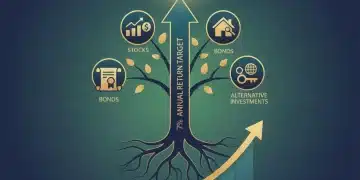
When facing an 8% inflation rate, traditional savings accounts, which typically offer low-interest rates, become detrimental to your financial health. Your money needs to work harder than inflation to maintain its value. This necessitates a shift towards strategic investment options that historically perform well during inflationary periods. The key is to seek out assets that either generate income that keeps pace with inflation or appreciate in value faster than inflation.
Diversification is not just a buzzword; it’s a critical strategy. Spreading your investments across various asset classes can mitigate risk and enhance returns. Consider a mix of real assets, inflation-indexed securities, and certain equities that have pricing power.
Assets that thrive in inflation
Certain asset classes have a proven track record of performing well during inflationary cycles. These typically include tangible assets or those that can adjust their pricing in response to rising costs.
- Real Estate: Property values and rental income often increase with inflation.
- Treasury Inflation-Protected Securities (TIPS): These government bonds adjust their principal value in line with the Consumer Price Index (CPI).
- Commodities: Gold, silver, oil, and other raw materials tend to rise in price as inflation increases.
- Dividend-paying Stocks: Companies with strong balance sheets and the ability to pass on increased costs to consumers can maintain profitability and continue paying dividends.
Investing in these areas requires careful research and, for some, professional guidance. The objective is to build a portfolio that not only grows but also actively protects your capital from the corrosive effects of rising prices. Remember, timing and continuous monitoring are crucial for success in a volatile economic climate.

The Role of Debt Management in High Inflation
In an environment of 8% inflation, managing your debt becomes as critical as managing your investments. The type of debt you hold, and its interest rate, can significantly impact your financial stability. While inflation erodes the value of money, it also effectively reduces the real value of fixed-rate debt over time. However, variable-rate debt can become a significant burden as interest rates often rise in response to inflation.
Prioritizing the repayment of high-interest, variable-rate debts, such as credit card balances, is a smart move. These debts can quickly spiral out of control as central banks raise interest rates to combat inflation. Conversely, fixed-rate debts, like a mortgage, become relatively cheaper to repay with inflated dollars, though refinancing might still be an option if lower rates become available.
Strategies for debt reduction
Developing a clear strategy for debt reduction can free up more of your income, making it available for investments that can outpace inflation. This approach not only improves your financial health but also reduces stress.
- Focus on eliminating high-interest consumer debt first.
- Consider consolidating debts into a lower-interest loan if available.
- Avoid taking on new variable-rate debt where possible.
- Review mortgage options; fixed rates offer stability against rising interest costs.
A balanced approach to debt management and investment is essential. While paying down debt, ensure you’re not neglecting opportunities to invest in assets that can grow faster than inflation. The aim is to reduce financial liabilities while simultaneously growing assets, creating a robust financial buffer against economic instability.
Diversifying Your Income Streams
Relying solely on one income source can be precarious, especially during periods of high inflation where the purchasing power of a single salary is rapidly diminished. Diversifying your income streams provides a crucial layer of financial resilience, offering multiple avenues for earning and helping to offset the rising cost of living. This strategy is about creating a financial safety net and increasing your overall earning capacity.
Consider exploring various opportunities that align with your skills and interests. This could range from freelancing and consulting to starting a small online business or investing in income-generating assets. The goal is to build a portfolio of income sources that can collectively keep pace with or even outpace an 8% inflation rate.
Exploring additional revenue avenues
There are numerous ways to diversify your income, each with its own set of requirements and potential rewards. The key is to find what works best for your situation and commit to it.
- Freelancing or consulting: Monetize existing skills or develop new ones.
- Dividend stocks or real estate investments: Generate passive income.
- Starting a side business: Leverage hobbies or passions into profit.
- Renting out spare assets: Utilize unused rooms, vehicles, or equipment.
Each additional income stream reduces your dependence on a single employer and provides more flexibility in managing your finances during inflationary times. It also offers the potential for faster wealth accumulation, which is a powerful tool for protecting savings inflation 2025. Proactive income diversification can transform your financial outlook, making you less vulnerable to economic shifts.
Long-Term Financial Planning and Professional Guidance
Navigating an 8% inflation rate requires more than just short-term adjustments; it demands a robust long-term financial plan. This plan should be dynamic, capable of adapting to ongoing economic changes, and focused on preserving and growing your wealth over time. A well-structured long-term plan considers your retirement goals, significant life events, and potential future economic landscapes.
While many individuals can manage their finances independently, the complexities of high inflation often warrant seeking professional guidance. Financial advisors specialize in crafting personalized strategies that account for individual risk tolerance, investment goals, and current economic conditions. They can provide invaluable insights into inflation-beating investments, tax-efficient strategies, and estate planning.
Benefits of expert financial advice
Engaging with a financial expert can offer several advantages, particularly when facing significant economic challenges like high inflation. Their expertise can help you make more informed and strategic decisions.
- Personalized investment strategies tailored to your situation.
- Guidance on tax implications of various investment vehicles.
- Assistance with retirement planning and wealth preservation.
- Access to market insights and economic forecasts.
A professional can help you avoid common pitfalls, optimize your portfolio for growth and protection, and ensure your financial plan remains aligned with your long-term objectives. Investing in expert advice can yield significant returns, especially when the economic waters are turbulent, making it a crucial component of successfully protecting savings inflation 2025.
Leveraging Technology for Financial Management
In today’s digital age, technology offers a wealth of tools and resources that can significantly enhance your financial management capabilities, especially when confronting an 8% inflation rate. From budgeting apps to investment platforms, these tools empower you to monitor your finances, make informed decisions, and automate various aspects of your financial plan. Leveraging technology can provide a clear, real-time overview of your financial health, allowing for quicker adjustments to your strategies.
Budgeting applications, for instance, can help you track spending, categorize expenses, and identify areas where you can cut back, which is essential when every dollar’s purchasing power is under threat. Investment platforms, on the other hand, provide access to a wide array of investment options, research tools, and performance tracking features, enabling you to manage your portfolio more effectively.
Essential digital tools for financial resilience
Several types of digital tools can play a pivotal role in strengthening your financial resilience against inflation. Choosing the right tools can make a substantial difference in achieving your financial goals.
- Budgeting Apps: Track income and expenses, set spending limits, and analyze financial patterns.
- Investment Tracking Software: Monitor portfolio performance, identify opportunities, and rebalance assets.
- Financial Planning Software: Create long-term financial projections and simulate different economic scenarios.
- Automated Savings Tools: Set up automatic transfers to savings or investment accounts, ensuring consistent contributions.
By integrating these technological solutions into your financial routine, you can streamline your money management, gain deeper insights into your financial behavior, and ultimately make more strategic decisions to safeguard your savings from the effects of inflation. Technology acts as a powerful ally in your quest for financial stability and growth in a challenging economic climate.
| Key Strategy | Brief Description |
|---|---|
| Budget Review | Re-evaluate spending to cut non-essential costs and reallocate funds. |
| Inflation-Beating Investments | Invest in assets like real estate, TIPS, and commodities that perform well in inflation. |
| Debt Prioritization | Focus on repaying high-interest, variable-rate debts first to reduce financial burden. |
| Income Diversification | Seek additional income streams to increase earning capacity and resilience. |
Frequently Asked Questions About Inflation and Savings
An 8% inflation rate means that the purchasing power of your money decreases by 8% each year. For example, what costs $100 today will cost approximately $108 a year from now. This significantly erodes the real value of savings held in low-interest accounts, making it crucial to seek investments that offer returns higher than the inflation rate to maintain your wealth.
Yes, certain investments tend to perform better during inflationary periods. These include real estate, which often sees property values and rental income rise; Treasury Inflation-Protected Securities (TIPS), designed to adjust with inflation; commodities like gold and oil; and stocks of companies with strong pricing power that can pass on increased costs to consumers without losing market share.
Adjusting your budget involves a thorough review of your income and expenses. Prioritize essential spending, identify areas for cost reduction (e.g., subscription services, dining out), and seek ways to optimize recurring costs like utilities. Meal planning, bulk purchasing, and exploring public transportation can also help mitigate the impact of rising prices on your daily finances.
The decision depends on the type of debt. High-interest, variable-rate debts, such as credit card balances, should generally be prioritized for repayment as their costs can escalate with rising interest rates. Fixed-rate debts, like mortgages, become relatively cheaper to repay with inflated dollars, potentially allowing for more focus on inflation-beating investments. A balanced approach is often best.
While not strictly necessary for everyone, professional financial advice can be highly beneficial, especially during periods of high inflation. A financial advisor can provide personalized strategies, help diversify your portfolio, offer tax-efficient solutions, and guide you through complex investment decisions. Their expertise can help optimize your financial plan and safeguard your wealth more effectively.
Conclusion
Navigating the Current 8% Inflation Rate: Strategies for Protecting Your Savings in 2025 demands a proactive, multifaceted approach to financial management. From meticulously revisiting your budget and strategically investing in inflation-resistant assets to diligently managing debt and diversifying income streams, each step contributes to building a more resilient financial future. Embracing professional guidance and leveraging modern technology can further empower you to make informed decisions and safeguard your wealth against the erosive effects of inflation. By implementing these strategies, individuals can not only protect their savings but also position themselves for continued financial growth and stability in an evolving economic landscape.
Author