Mortgage Rates 2026: Navigating the 7% Interest Rate Landscape
Mortgage Rates 2026: Navigating the 7% Interest Rate Landscape
The housing market is a dynamic and often unpredictable beast, heavily influenced by a myriad of economic factors. As we cast our gaze towards 2026, one figure looms large in the minds of prospective homeowners and existing mortgage holders alike: the possibility of 7% mortgage rates. This isn’t just a number; it represents a significant shift that could redefine affordability, investment strategies, and the overall trajectory of the real estate sector. Understanding what a 7% interest rate environment entails is crucial for anyone looking to make informed decisions in the coming years. This comprehensive guide will delve deep into the economic forces at play, explore the potential impacts on various stakeholders, and outline actionable strategies to navigate what could be a challenging, yet not insurmountable, landscape.
Understanding the Economic Forces Driving Mortgage Rates 2026
To comprehend why 7% mortgage rates are a topic of discussion, we must first dissect the underlying economic currents. Mortgage rates are not set in isolation; they are a direct reflection of broader economic health, inflation expectations, and monetary policy decisions. Several key factors contribute to their fluctuation, and a confluence of these could push rates towards or even above the 7% threshold by 2026.
Inflation: The Primary Driver
Inflation is arguably the most significant factor influencing mortgage rates. When the cost of goods and services rises consistently, the purchasing power of money decreases. Lenders, to compensate for this erosion of value, demand higher returns on their loans. The Federal Reserve, tasked with maintaining price stability, often responds to persistent inflation by raising its benchmark interest rate, the federal funds rate. This, in turn, influences the rates on various consumer loans, including mortgages.
If inflationary pressures persist or re-emerge in the lead-up to 2026, perhaps due to supply chain disruptions, geopolitical events, or robust consumer demand, the Federal Reserve might continue its hawkish stance or even resume rate hikes. Such actions directly translate to higher borrowing costs for consumers, pushing mortgage rates upwards.
Federal Reserve Policy and Quantitative Tightening
The Federal Reserve’s monetary policy plays a pivotal role. Beyond the federal funds rate, the Fed also influences long-term interest rates, including those for mortgages, through its balance sheet operations. Quantitative tightening (QT), where the Fed reduces its holdings of Treasury bonds and mortgage-backed securities (MBS), decreases the demand for these assets in the market. A lower demand typically leads to higher yields (interest rates) on these securities, which then serves as a benchmark for mortgage rates.
Should the Fed continue or intensify its QT efforts to combat inflation or manage its balance sheet, the upward pressure on mortgage rates will be sustained. The market’s expectation of future Fed actions is also critical; even the anticipation of rate hikes can cause current rates to climb.
Economic Growth and Labor Market Strength
A strong economy, characterized by robust GDP growth and a tight labor market with low unemployment, can also contribute to higher interest rates. When the economy is performing well, there’s increased demand for credit, and lenders can command higher rates. A booming job market often fuels consumer spending and investment, which can further stoke inflationary fires, prompting the Fed to act.
Conversely, a significant economic slowdown or recession could lead to lower rates as the Fed might cut rates to stimulate growth. However, if the economy remains resilient or experiences a ‘soft landing’ from inflationary pressures, the environment might support higher steady-state mortgage rates.
Global Economic Conditions
The interconnectedness of the global economy means that international events can also impact domestic mortgage rates. Global inflation, currency fluctuations, and geopolitical stability or instability can all influence investor sentiment and capital flows. For instance, if global investors seek the relative safety of U.S. Treasury bonds during times of international turmoil, it could temporarily suppress yields. However, if global inflation is rampant, it could exacerbate domestic inflationary pressures.
The Impact of 7% Mortgage Rates 2026 on Homeowners and Buyers
A 7% interest rate environment would have profound implications across the housing market, affecting both existing homeowners and those aspiring to buy.
The number of eligible buyers would shrink, leading to decreased demand. This could, in some markets, put downward pressure on home prices, but it also creates a situation where fewer people can afford to buy, even if prices adjust. The dream of homeownership becomes more distant for a larger segment of the population.

For Existing Homeowners: Refinancing Challenges and Equity Stagnation
Existing homeowners with fixed-rate mortgages secured at lower rates (e.g., 3-5%) would largely be unaffected in terms of their monthly payments. However, their ability to refinance would be severely curtailed. Refinancing at 7% would only make sense if their current rate was significantly higher, which is unlikely for most who locked in during the low-rate era.
For those with adjustable-rate mortgages (ARMs) or those with expiring fixed-rate terms, the prospect of 7% mortgage rates is concerning. Their payments could reset significantly higher, placing considerable strain on household budgets. This could lead to an increase in defaults or forced sales if homeowners cannot manage the higher costs.
Furthermore, higher rates can dampen home price appreciation. If fewer buyers can afford homes, the market cools, and the rate at which home values increase slows down or even reverses. This means homeowners might see their equity growth stagnate or decline, impacting their ability to leverage their home’s value for other financial needs.
Real Estate Market Dynamics: Supply, Demand, and Inventory
A 7% mortgage rate environment would inevitably alter the supply and demand dynamics of the real estate market. With fewer buyers, demand would likely soften. However, supply might also remain constrained. Existing homeowners, especially those with low fixed rates, would be hesitant to sell and buy a new home at a much higher rate. This ‘lock-in effect’ could keep inventory levels low, preventing a significant crash in home prices despite reduced demand.
The market could become more localized, with some areas experiencing greater price adjustments than others, depending on local economic health, job growth, and housing supply. Luxury markets might be less affected due to the financial resilience of buyers, while entry-level and mid-range markets could face considerable challenges.
Strategies to Navigate the 7% Mortgage Rates 2026 Landscape
While the prospect of 7% mortgage rates can seem daunting, there are proactive strategies that both current and prospective homeowners can employ to mitigate the impact and even find opportunities.
For Prospective Homebuyers: Preparation is Key
- Boost Your Credit Score: A higher credit score can qualify you for the best possible rates available, even in a high-rate environment. Focus on paying bills on time, reducing debt, and monitoring your credit report for errors.
- Save a Larger Down Payment: A substantial down payment reduces the amount you need to borrow, thereby lowering your monthly payment and overall interest paid. It also shows lenders you’re a lower-risk borrower.
- Explore Different Loan Products: While fixed-rate mortgages are popular, consider other options. Adjustable-rate mortgages (ARMs) might offer lower initial rates, which could be beneficial if you plan to sell or refinance before the rate adjusts. However, understand the risks associated with ARM adjustments.
- Budget Meticulously: Use online mortgage calculators to understand what different interest rates mean for your monthly payments. Factor in all homeownership costs, including property taxes, insurance, and potential maintenance.
- Consider a Smaller Home or Different Location: To stay within budget, you might need to adjust your expectations regarding home size or location. Explore more affordable neighborhoods or consider a smaller property to start.
- Lock in Rates Strategically: If you’re close to buying and rates are trending upwards, a rate lock can protect you from further increases during the closing process.
For Existing Homeowners: Optimize and Protect
- Review Your Current Mortgage: Understand the terms of your existing loan, especially if you have an ARM. Know when your rate is scheduled to adjust and by how much it could change.
- Accelerate Principal Payments: If you have a low fixed rate, consider making extra principal payments. This reduces the total interest paid over the life of the loan and builds equity faster, providing a cushion if you ever need to sell in a softer market.
- Build an Emergency Fund: A robust emergency fund is crucial to cover unexpected expenses or potential increases in ARM payments without jeopardizing your home.
- Explore Home Equity Options Cautiously: If you have substantial equity, a home equity line of credit (HELOC) or home equity loan might be options for financing other needs. However, be mindful that these rates will also be influenced by the broader interest rate environment.
- Property Tax Appeals: As home values potentially stagnate or decline, it might be an opportune time to appeal your property taxes if you believe your assessment is too high.
- Consider a Home Improvement Loan (if necessary): If you need to make critical home improvements, evaluate the cost-benefit analysis carefully. Higher interest rates mean more expensive borrowing, so prioritize essential repairs over cosmetic upgrades.
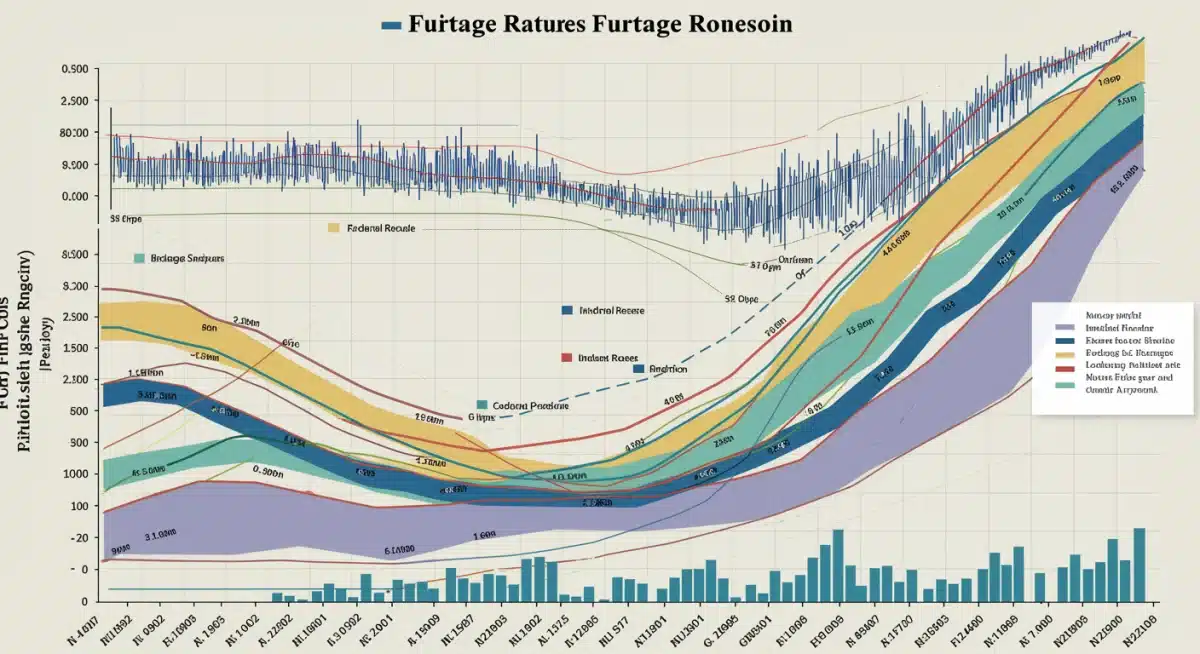
The Broader Economic Landscape and What Could Change
Predicting economic outcomes years in advance is inherently challenging, and while 7% mortgage rates is a plausible scenario, it’s not a foregone conclusion. Several factors could shift the trajectory of interest rates.
Deflationary Pressures or Recession
A severe economic downturn or a period of deflation (a sustained decrease in prices) would likely prompt the Federal Reserve to cut interest rates aggressively to stimulate the economy. In such a scenario, mortgage rates could fall significantly below 7%.
Global Economic Stability
Increased global economic stability, reduced geopolitical tensions, and a more synchronized global fight against inflation could lead to a more predictable and potentially lower interest rate environment. Conversely, new global crises could introduce further volatility.
Technological Advancements and Productivity
Significant advancements in technology leading to increased productivity could help combat inflation by lowering production costs. This could allow the Fed to maintain lower interest rates without fear of reigniting inflationary spirals.
Government Fiscal Policy
Government spending and taxation policies also play a role. Large fiscal deficits, if financed by borrowing, can put upward pressure on interest rates. Conversely, fiscal prudence could help stabilize rates.
The Psychology of the Housing Market in a High-Rate Environment
Beyond the pure financial calculations, the psychological aspect of a 7% mortgage rates environment cannot be overlooked. Fear of missing out (FOMO) often drives housing booms, as buyers rush to secure homes before prices or rates climb higher. In a high-rate environment, this sentiment can reverse.
Buyers might adopt a ‘wait and see’ approach, hoping for rates to decline or prices to fall. This can lead to decreased transaction volumes and a slower market. Sellers, especially those who purchased at lower rates, might be reluctant to list their homes, further constricting supply. This dynamic can create a standoff, where buyers are waiting for lower prices/rates, and sellers are waiting for higher demand.
Real estate agents and brokers would need to adapt their strategies, focusing more on educating clients about market realities, affordability tools, and different financing options. The emphasis would shift from rapid appreciation to long-term stability and value.
Long-Term Outlook: Is 7% the New Normal?
For decades, particularly after the 2008 financial crisis, the world experienced an era of historically low interest rates. Many grew accustomed to 3-5% mortgage rates, viewing them as the norm. However, from a historical perspective, 7% mortgage rates are not unprecedented. In the 1990s and early 2000s, rates frequently hovered in the 7-8% range, and in the late 1970s and early 1980s, they soared into double digits.
The question then becomes: is 7% a temporary peak, or are we returning to a higher ‘new normal’ for interest rates? Many economists believe that the era of ultra-low rates was an anomaly, driven by unique global economic conditions. A return to more historically typical rates, even if higher than recent memory, could be a sign of a more normalized and potentially healthier economy, albeit one that requires different financial planning strategies.
This ‘new normal’ would necessitate a recalibration of expectations for both buyers and sellers. It would emphasize the importance of financial discipline, saving, and prudent borrowing. It might also encourage innovation in housing, such as more affordable housing solutions, smaller homes, or alternative ownership models.
Conclusion: Preparing for the Future of Mortgage Rates 2026
The possibility of 7% mortgage rates is a significant consideration for anyone involved in the housing market. While the future is never certain, understanding the economic forces that could drive rates to this level—primarily inflation, Federal Reserve policy, and economic growth—is paramount. The impacts on affordability for buyers and refinancing options for existing homeowners are substantial, demanding careful planning and strategic decision-making.
By focusing on improving credit scores, increasing down payments, exploring diverse loan products, and meticulously budgeting, prospective homeowners can better position themselves. Existing homeowners can benefit from accelerating principal payments, building emergency funds, and reviewing their current mortgage terms carefully. The broader real estate market will likely see shifts in demand, supply, and price appreciation, requiring adaptability from all participants.
Ultimately, navigating the landscape of 7% mortgage rates is about preparedness. It’s about recognizing that the market is always evolving and that informed decisions, coupled with sound financial planning, are the best tools to achieve your homeownership goals, regardless of the prevailing interest rate environment. Stay informed, consult with financial advisors, and adapt your strategy to the realities of the market as they unfold.
Author