Inflation’s Impact on Savings: 5 Strategies for 2026 Protection
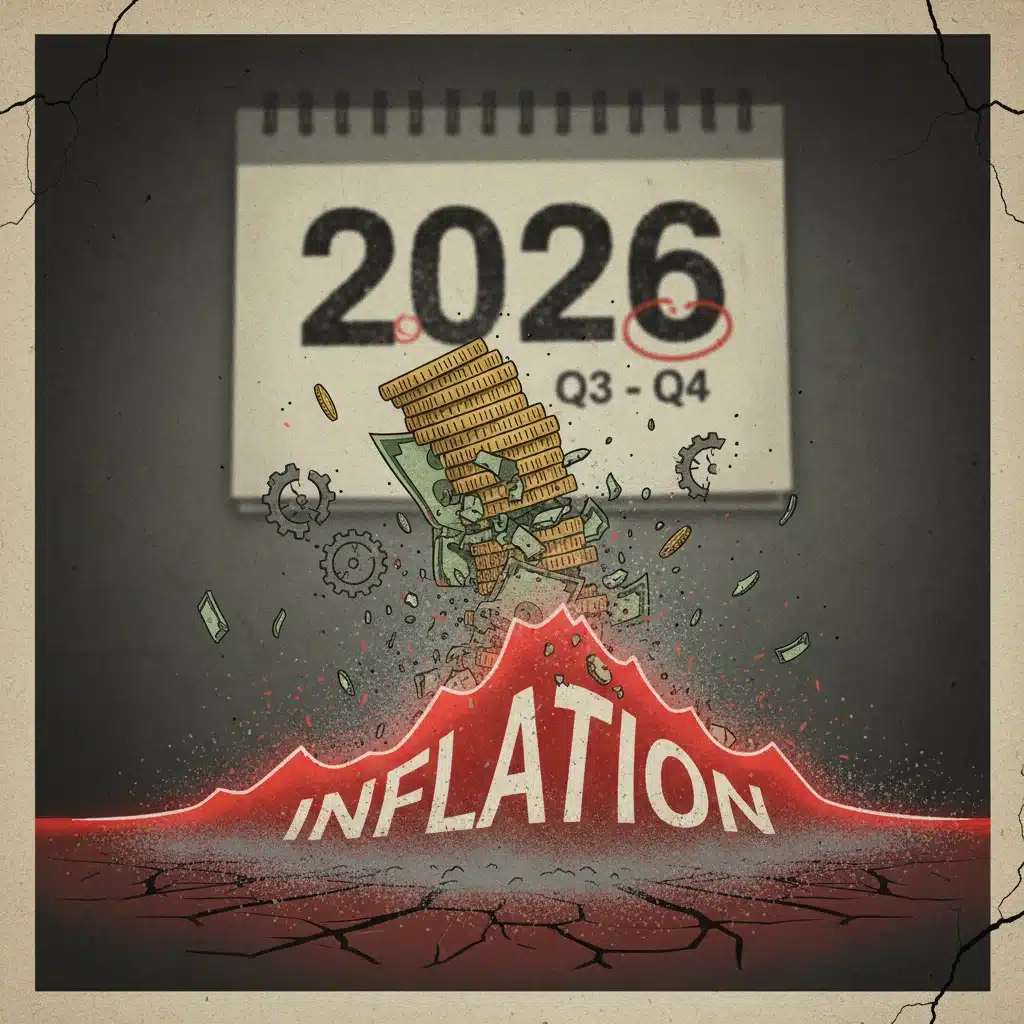
The Impact of Inflation on Savings Accounts: Protecting Your Capital with 5 Key Strategies for 2026
In an ever-evolving global economy, the specter of inflation consistently looms large, threatening to diminish the purchasing power of hard-earned savings. As we look towards 2026, understanding the profound impact of inflation on savings accounts is not merely a theoretical exercise but a critical necessity for anyone committed to financial stability and growth. For many, the traditional savings account has long been considered a safe haven, a reliable place to store money for future needs. However, in an inflationary environment, the very safety of these accounts can become their greatest weakness. This comprehensive guide will delve into the mechanisms through which inflation erodes wealth, analyze the current economic landscape, and, most importantly, equip you with five key strategies to protect your capital and ensure your financial well-being by 2026 and beyond.
Inflation, at its core, is the rate at which the general level of prices for goods and services is rising, and consequently, the purchasing power of currency is falling. When inflation rates outpace the interest rates offered by savings accounts, your money, while numerically stable, is effectively losing value. This silent thief can chip away at your financial future, making it imperative to proactively implement robust strategies. The journey to financial resilience in an inflationary period begins with a clear understanding of the challenge and a commitment to strategic action. Let’s embark on this essential exploration to safeguard your savings.
Understanding the Silent Erosion: How Inflation Impacts Your Savings
Before we can effectively protect our capital, it’s crucial to grasp the insidious nature of inflation’s impact on savings accounts. Imagine you have £10,000 in a savings account earning a modest 0.5% interest rate. If the inflation rate is 3%, your money is actually losing 2.5% of its purchasing power each year. While the numerical value in your account remains £10,000 (plus a tiny bit of interest), what that £10,000 can buy tomorrow is significantly less than what it can buy today. This is the core challenge that makes Inflation Savings Strategies so vital.
This erosion is particularly damaging for long-term savings goals. Funds earmarked for retirement, a child’s education, or a down payment on a house can see their real value significantly reduced over time, turning what once seemed like an adequate sum into a mere fraction of what’s needed. The psychological impact can also be profound, as individuals feel their efforts to save are being undermined by forces beyond their control. Therefore, recognizing this silent erosion is the first step towards building effective defenses and formulating robust Inflation Savings Strategies.
The current economic climate, characterized by supply chain disruptions, geopolitical tensions, and shifts in consumer demand, has contributed to elevated inflation levels in many parts of the world. While central banks employ various tools to manage inflation, it’s a dynamic and often unpredictable force. Relying solely on traditional savings accounts during such periods is akin to trying to bail out a leaky boat with a teacup. Proactive measures are not just recommended; they are essential for preserving wealth.
Strategy 1: Embrace High-Yield Savings Accounts and Certificates of Deposit (CDs)
One of the most straightforward and accessible Inflation Savings Strategies is to move your cash from traditional, low-interest savings accounts to high-yield alternatives. While even high-yield accounts may not always outpace inflation, they significantly mitigate its impact compared to standard accounts. These accounts, often offered by online banks, typically boast interest rates several times higher than those of brick-and-mortar institutions, sometimes even matching or slightly exceeding current inflation rates, depending on market conditions.
Certificates of Deposit (CDs) offer another compelling option, especially for money you won’t need immediate access to. CDs are time deposits that typically offer higher interest rates in exchange for keeping your money locked up for a specified period (e.g., 6 months, 1 year, 3 years, 5 years). The longer the term, generally the higher the interest rate. By laddering CDs – investing in multiple CDs with staggered maturity dates – you can maintain some liquidity while still benefiting from higher rates. This approach allows you to reinvest maturing CDs at potentially higher rates if interest rates continue to climb, providing a flexible yet robust component of your Inflation Savings Strategies.
When considering high-yield savings accounts or CDs, always compare interest rates across different institutions. Pay attention to any fees, minimum balance requirements, and withdrawal penalties. Ensuring your chosen account is FDIC-insured (or equivalent in your country) is also paramount for protecting your principal.
Strategy 2: Explore Inflation-Protected Securities (e.g., TIPS)
For those seeking a more direct hedge against inflation, inflation-protected securities are an invaluable tool. In the United States, Treasury Inflation-Protected Securities (TIPS) are a prime example. TIPS are government bonds whose principal value adjusts with the Consumer Price Index (CPI), a common measure of inflation. When inflation rises, the principal value of your TIPS increases, and consequently, your interest payments (which are a fixed percentage of the adjusted principal) also increase. This direct linkage to inflation makes them a powerful component of any robust Inflation Savings Strategies.
The beauty of TIPS lies in their ability to guarantee that your investment will at least keep pace with inflation, preserving your purchasing power. While their returns might not always be as high as other investments during periods of low inflation, their protective qualities become incredibly valuable when inflation is a significant concern. They offer a real return above inflation, making them a unique asset in a diversified portfolio.
Similar inflation-linked bonds exist in other countries, such as Index-Linked Gilts in the UK. Researching and understanding these country-specific options is crucial. Investing in TIPS or similar instruments can be done directly through the government (e.g., TreasuryDirect in the US) or through mutual funds and exchange-traded funds (ETFs) that specialize in these securities. Adding these to your financial arsenal is a sophisticated yet accessible way to implement effective Inflation Savings Strategies.
Strategy 3: Strategic Investment in Real Assets and Equities
Beyond traditional savings vehicles, strategic investment in real assets and equities offers another powerful pathway to combat inflation. Real assets, such as real estate, commodities (like gold, silver, and oil), and infrastructure, tend to hold their value or even appreciate during inflationary periods. This is because their intrinsic value is not tied to the fluctuating value of currency in the same way as cash.
Real estate, for instance, can serve as a strong inflation hedge. Property values and rental income often rise with inflation, providing both capital appreciation and a growing income stream. Investing in real estate can take various forms, from direct property ownership to Real Estate Investment Trusts (REITs), which allow you to invest in portfolios of income-generating properties without the complexities of direct ownership. This diversification into tangible assets is a cornerstone of effective Inflation Savings Strategies.

Equities, or stocks, also have a historical tendency to outperform inflation over the long term. Companies can often pass on increased costs due to inflation to consumers through higher prices, thereby maintaining or even increasing their revenues and profits. Investing in companies with strong pricing power, robust balance sheets, and essential products or services can be particularly beneficial. Diversifying your stock portfolio across various sectors and geographies is key to mitigating risk and maximizing potential returns. While stocks come with their own set of risks, their potential for growth makes them an indispensable part of comprehensive Inflation Savings Strategies.
It’s important to remember that investment in real assets and equities requires a longer-term perspective and a higher tolerance for risk compared to savings accounts. However, for those looking to genuinely grow their wealth and outpace inflation, they are essential considerations.
Strategy 4: Diversify Your Portfolio with a Focus on Growth and Income
Diversification is not just a buzzword in finance; it’s a fundamental principle, especially when crafting Inflation Savings Strategies. A well-diversified portfolio spreads risk across different asset classes, industries, and geographical regions, reducing the impact of poor performance in any single area. When inflation is a concern, diversification should also include assets that have historically performed well during inflationary periods, combining growth potential with income generation.
Consider a mix of assets that includes:
- Equities: As mentioned, stocks can be a powerful inflation hedge, particularly those of companies with strong pricing power and stable demand.
- Bonds: While traditional bonds can suffer during inflation, inflation-protected bonds (like TIPS) are designed to thrive. Short-duration bonds might also be less susceptible to interest rate risk.
- Real Estate: Direct ownership, REITs, or even real estate-focused ETFs can provide a tangible asset hedge.
- Commodities: Gold, silver, and other commodities often act as a store of value during economic uncertainty and inflation.
- Alternative Investments: Depending on your risk tolerance and financial sophistication, options like private equity, venture capital, or even certain cryptocurrencies (though highly volatile) might be considered for a small portion of a highly diversified portfolio.
The goal of diversification in an inflationary environment is to create a portfolio where at least some assets are likely to perform well, even if others struggle. This balanced approach helps to preserve your capital’s purchasing power and potentially generate real returns. Regularly reviewing and rebalancing your portfolio to ensure it aligns with your risk tolerance and financial goals is also critical for effective Inflation Savings Strategies.
Strategy 5: Manage Debt Wisely and Leverage Inflation to Your Advantage
While inflation erodes the value of savings, it can, paradoxically, reduce the real burden of fixed-rate debt. If you have a fixed-rate mortgage or loan, the future payments you make will, in real terms, be worth less than the payments you make today, assuming your income keeps pace with inflation. This doesn’t mean taking on unnecessary debt, but rather managing existing debt strategically is one of the more nuanced Inflation Savings Strategies.
Firstly, prioritize paying off high-interest, variable-rate debt. Credit card debt, for example, typically has variable interest rates that can rise with inflation, making it even more expensive. Eliminating this type of debt frees up cash flow and removes a significant financial drain. Secondly, if you have fixed-rate debt, such as a mortgage, and your income is rising with inflation, the real cost of that debt decreases over time. This can free up capital that can then be strategically invested in inflation-hedging assets.
However, it’s crucial to balance this perspective with the overall goal of financial security. While inflation might make fixed debt cheaper in real terms, it also increases the cost of living. Therefore, ensuring you have a strong emergency fund and are not overextended with debt remains paramount. The objective is to leverage the dynamics of inflation to your advantage where possible, without compromising your financial stability. Thoughtful debt management is an often-overlooked yet powerful component of comprehensive Inflation Savings Strategies.
The Long-Term View: Adapting Your Financial Plan for Sustainable Growth
Implementing these five Inflation Savings Strategies is not a one-time event but an ongoing process that requires regular review and adaptation. The economic landscape is constantly shifting, and what works today might need adjustment tomorrow. As we move towards 2026, staying informed about economic indicators, central bank policies, and global events will be crucial for making timely and effective financial decisions.
Consider consulting with a financial advisor who can provide personalized guidance based on your individual financial situation, risk tolerance, and long-term goals. A professional can help you construct a diversified portfolio, identify suitable inflation-protected investments, and navigate the complexities of the market. Their expertise can be invaluable in crafting and refining your Inflation Savings Strategies.
Furthermore, focus on increasing your income. While not directly a savings strategy, growing your earning potential through skill development, career advancement, or side hustles can significantly offset the impact of inflation. More income means more capital available for saving and investing, allowing you to not only protect but also grow your wealth in real terms.

Education is another powerful tool. The more you understand about finance, economics, and investment principles, the better equipped you will be to make informed decisions. Read reputable financial news, follow expert analyses, and continuously learn about new investment opportunities and risks. This continuous learning process is fundamental to maintaining effective Inflation Savings Strategies.
Beyond 2026: Building Resilience for the Future
The strategies outlined above are designed to help you protect your capital against inflation’s impact on savings accounts specifically for 2026, but their principles extend far beyond a single year. Building financial resilience is about creating a robust framework that can withstand various economic challenges. Inflation is just one of many variables that can affect your financial well-being, and a flexible, well-informed approach is your best defense.
Think of your financial plan as a living document, one that needs regular attention and occasional revisions. The goal is not just to survive inflation but to thrive despite it. By actively managing your savings, strategically investing, and continuously educating yourself, you can transform the threat of inflation into an opportunity for smarter financial growth. Your financial future in 2026 and beyond depends on the proactive steps you take today to implement these critical Inflation Savings Strategies.
In conclusion, while inflation can be a daunting force, it is not insurmountable. By understanding its mechanisms and employing a combination of high-yield accounts, inflation-protected securities, strategic real asset and equity investments, portfolio diversification, and wise debt management, you can effectively safeguard your savings. The time to act is now. Start implementing these Inflation Savings Strategies to ensure your capital remains protected and continues to work for you, securing your financial future for 2026 and the many years to come.
Author