Maximize GI Bill Benefits 2025: Program Comparison

Maximizing GI Bill Benefits 2025 for higher education involves understanding the Post-9/11, Montgomery GI Bill, and Yellow Ribbon programs to strategically choose the best fit for your academic and financial goals.
Navigating the landscape of higher education can be complex, especially when seeking to leverage hard-earned military benefits. For veterans and service members planning their academic future in 2025, understanding how to apply and maximize GI Bill Benefits 2025 is crucial. This guide will help you understand the nuances of the Post-9/11 GI Bill, the Montgomery GI Bill, and the Yellow Ribbon Program, ensuring you make the most informed decisions for your educational journey.
Understanding the Post-9/11 GI Bill (Chapter 33)
The Post-9/11 GI Bill, formally known as Chapter 33, stands as one of the most comprehensive education benefit programs for veterans and service members. It provides financial support for education and housing to individuals with at least 90 days of aggregate service after September 10, 2001, or those discharged with a service-connected disability after 30 days. This benefit covers tuition, fees, housing, and books, making higher education significantly more accessible.
Eligibility for the Post-9/11 GI Bill is primarily determined by the length of active duty service. The longer you served, the higher percentage of benefits you are eligible to receive, up to 100% for those with three or more years of service. This tiered system ensures that those who have dedicated more time to their country receive the fullest support for their educational endeavors.
Key Benefits and Coverage
Understanding the specific components of the Post-9/11 GI Bill is essential for planning your education budget. The program covers more than just tuition, offering a holistic approach to student support.
- Tuition and Fees: The VA pays tuition and fees directly to the school, up to the maximum in-state public school tuition and fees. For private or foreign schools, a national maximum cap applies.
- Monthly Housing Allowance (MHA): A tax-free stipend paid directly to the student, based on the E-5 basic allowance for housing (BAH) with dependents rate for the school’s zip code. This is a critical component for covering living expenses during studies.
- Books and Supplies Stipend: An annual stipend up to $1,000, paid proportionally based on enrollment, to cover the cost of books and other necessary supplies.
The flexibility of the Post-9/11 GI Bill also extends to the types of education it supports. Beyond traditional four-year degrees, it can be used for vocational training, licensing and certification tests, and even some non-college degree programs. This broad scope allows beneficiaries to tailor their education to their career aspirations.
In conclusion, the Post-9/11 GI Bill offers substantial financial assistance for higher education, covering a wide range of costs. Its tiered eligibility and comprehensive benefits make it a cornerstone for veterans seeking to further their education.
Exploring the Montgomery GI Bill (MGIB-AD and MGIB-SR)
The Montgomery GI Bill (MGIB) predates the Post-9/11 GI Bill and still serves as a vital educational resource for many service members and veterans. It is divided into two main programs: MGIB-Active Duty (MGIB-AD, Chapter 30) for those who served at least two years on active duty, and MGIB-Selected Reserve (MGIB-SR, Chapter 1606) for those who commit to a six-year obligation in the Selected Reserve. Each program has distinct eligibility requirements and benefits, making it crucial to understand which one applies to your situation.
Unlike the Post-9/11 GI Bill, which often pays directly to the school, the Montgomery GI Bill typically provides a monthly payment directly to the student. This gives students more control over how they allocate their funds but also places the responsibility of paying tuition and fees directly on them. The maximum monthly benefit amounts are adjusted annually, so staying informed about the latest figures is important.
Eligibility and Benefit Structure
Eligibility for the MGIB-AD generally requires a minimum of two years of active duty service and an honorable discharge. Participants must also have contributed $1,200 to the program during their first year of service. MGIB-SR eligibility is tied to serving in the Selected Reserve for a specified period and completing initial active duty for training.
- MGIB-AD (Chapter 30): Provides up to 36 months of education benefits. The monthly payment rate for full-time enrollment is a set amount, which the student receives to cover tuition, housing, and books.
- MGIB-SR (Chapter 1606): Offers up to 36 months of benefits for members of the Army, Navy, Air Force, Marine Corps, Coast Guard Reserve, Army National Guard, and Air National Guard. The monthly payment is a lower fixed rate compared to MGIB-AD.
Choosing between the Montgomery GI Bill and the Post-9/11 GI Bill can be a complex decision. Often, the Post-9/11 GI Bill offers more comprehensive coverage, especially for tuition and housing, but this isn’t always the case for every individual’s circumstances. Factors like the cost of tuition at your chosen institution, your living expenses, and your length of service play a significant role in determining the most advantageous program.
In summary, the Montgomery GI Bill programs provide valuable educational assistance with direct payments to the student. While different from the Post-9/11 GI Bill, they remain an important option for many veterans and reservists seeking higher education.
The Yellow Ribbon Program: Bridging the Funding Gap
For veterans eligible for the Post-9/11 GI Bill at the 100% benefit level, the Yellow Ribbon Program can be a game-changer. This program helps cover tuition and fees that exceed the maximum amount payable by the Post-9/11 GI Bill for private institutions, out-of-state tuition at public schools, and graduate programs. It’s a voluntary agreement between the VA and participating institutions, where the school funds a portion of the unmet costs, and the VA matches that amount.
The Yellow Ribbon Program is not a standalone benefit but rather an enhancement to the Post-9/11 GI Bill. It is crucial for veterans attending expensive private universities or those pursuing out-of-state education where standard Post-9/11 benefits might not cover the full tuition. Participation in the Yellow Ribbon Program varies by school and often by specific programs within a school, making research into your chosen institution’s offerings paramount.
How the Yellow Ribbon Program Works
The mechanics of the Yellow Ribbon Program involve a partnership between the VA and educational institutions. Schools decide the amount of unmet tuition and fees they will contribute, and the VA matches that amount, effectively doubling the school’s contribution. This can significantly reduce or even eliminate out-of-pocket tuition costs for eligible veterans.
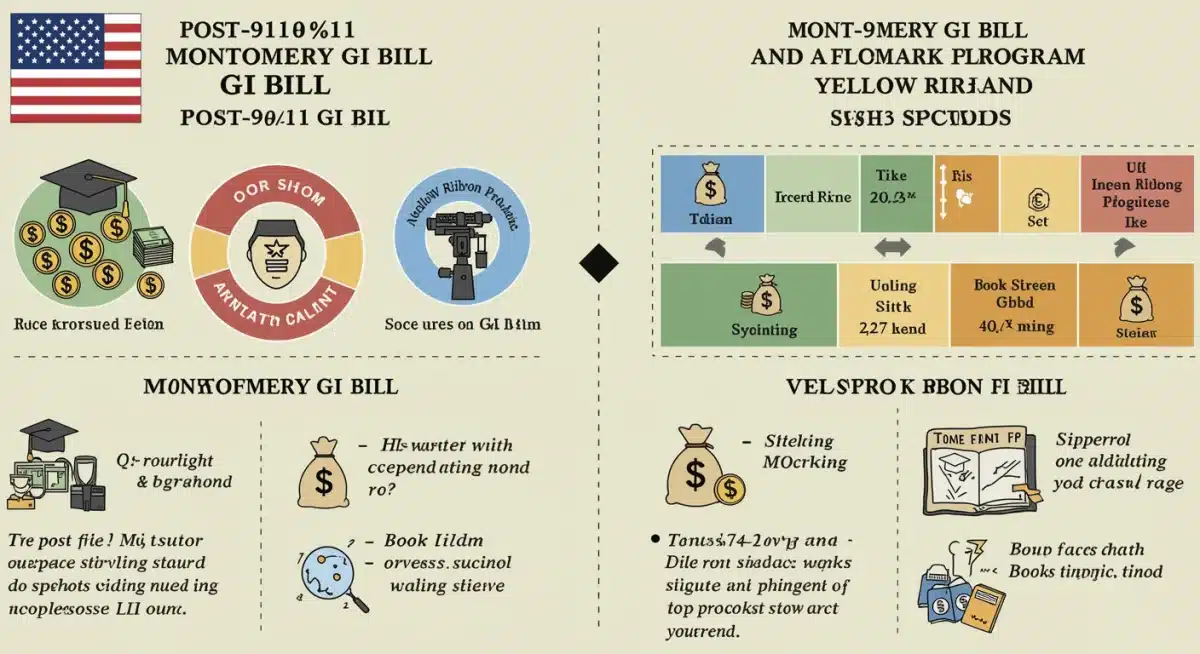
- School Participation: Institutions must agree to participate in the Yellow Ribbon Program and determine the amount they will contribute. This amount can vary widely from school to school.
- VA Matching: The VA matches the school’s contribution, providing additional funds to cover tuition and fees.
- Eligibility: Only veterans eligible for the maximum Post-9/11 GI Bill benefit (100% eligibility) can utilize the Yellow Ribbon Program.
It’s important to note that schools may limit the number of Yellow Ribbon recipients, and funds are often awarded on a first-come, first-served basis. Therefore, early application and communication with your school’s Veterans Affairs office are highly recommended. Understanding the specific benefits offered by your desired institution under the Yellow Ribbon Program is key to maximizing your financial aid.
In conclusion, the Yellow Ribbon Program is an invaluable supplement to the Post-9/11 GI Bill, especially for those facing higher education costs beyond the standard benefit caps. It significantly expands educational opportunities for eligible veterans at participating institutions.
Comparing the Programs: Which is Right for You?
Choosing the right GI Bill program can significantly impact your educational and financial well-being. The decision often boils down to a detailed comparison of the Post-9/11 GI Bill, the Montgomery GI Bill (MGIB-AD or MGIB-SR), and the potential for the Yellow Ribbon Program. There isn’t a one-size-fits-all answer, as the optimal choice depends on individual service history, educational goals, and financial needs.
For most veterans who served after September 10, 2001, the Post-9/11 GI Bill often provides the most robust benefits, particularly with its direct payment of tuition and fees, coupled with a generous housing allowance. However, for those attending less expensive institutions or those who prefer direct cash payments to manage their own expenses, the Montgomery GI Bill might be more appealing. Service members should carefully evaluate their specific circumstances.
Factors to Consider for Optimal Choice
Making an informed decision requires a thorough assessment of several key variables. These factors will guide you toward the program that best aligns with your academic aspirations and financial situation.
- Length of Service: Determines your percentage of Post-9/11 GI Bill benefits.
- Cost of Education: Tuition and fees at your chosen institution, especially if it’s a private school or out-of-state.
- Living Expenses: The cost of housing in the area where you plan to study, affecting the value of the Monthly Housing Allowance.
- Contribution to MGIB: If you contributed to the Montgomery GI Bill, you might need to weigh that investment against the Post-9/11 benefits.
It is also crucial to consider future educational goals. If you plan to pursue a graduate degree or attend a highly selective private university, the Yellow Ribbon Program, in conjunction with the Post-9/11 GI Bill, becomes an essential factor. Consulting with a Veterans Affairs education benefits counselor can provide personalized guidance, helping you navigate the complexities and make the best choice for your unique situation.
Ultimately, the best GI Bill program is the one that provides the most comprehensive support for your specific educational path. A careful comparison, considering all factors, is key to maximizing your benefits.
Application Process and Key Deadlines for 2025
Applying for your GI Bill benefits requires careful attention to detail and adherence to specific deadlines. While the VA strives to make the process as straightforward as possible, understanding each step ensures a smooth transition into your educational journey. The application typically involves submitting an application form to the VA, followed by providing necessary documentation to your chosen educational institution.
For those planning to use their benefits in 2025, it’s advisable to start the application process well in advance of your desired enrollment date. This allows ample time for the VA to process your application and for your school to certify your enrollment. Delays can occur, so proactive planning is your best strategy to avoid any interruption in funding.
Steps to Secure Your Benefits
The application process can seem daunting, but breaking it down into manageable steps can simplify it significantly. Each step is critical to ensuring your benefits are processed correctly and on time.
- Apply for Benefits: Complete VA Form 22-1990, “Application for Education Benefits,” online through the VA’s eBenefits portal or by mail.
- Receive Certificate of Eligibility: Once your application is processed, the VA will send you a Certificate of Eligibility (COE) detailing your benefits, eligibility percentage, and remaining entitlement.
- Enroll in School: Apply and be accepted into your chosen educational program. Inform the school’s Veterans Affairs office of your intent to use your GI Bill benefits.
- School Certification: The school must certify your enrollment to the VA. This step initiates the payment process for tuition, fees, and housing allowances.
It’s also important to be aware of any specific deadlines set by your educational institution for submitting veteran benefit paperwork. These institutional deadlines can sometimes precede the VA’s processing times, so coordination between you, the VA, and your school is paramount. Regularly check the VA’s official website for any updates to policies or procedures for 2025.
In conclusion, a timely and accurate application process is crucial for securing your GI Bill benefits. By following the outlined steps and being mindful of deadlines, you can ensure a seamless transition into your higher education.
Maximizing Your Benefits: Strategic Considerations
Beyond simply applying for benefits, there are strategic considerations that can help you truly maximize the value of your GI Bill. This involves understanding how different aspects of your education and financial planning interact with your benefits. From choosing the right school to managing your living expenses, every decision can influence the overall impact of your educational funding.
One key strategy involves researching schools that are particularly veteran-friendly. Many institutions offer additional support services, academic advising tailored for veterans, and robust Yellow Ribbon Program participation. These resources can enhance your educational experience and provide crucial assistance as you transition from military to academic life. Selecting such a school can make a significant difference in your overall success and benefit utilization.
Advanced Strategies for Optimal Use
To get the most out of your GI Bill Benefits 2025, consider these advanced strategies that go beyond basic application.
- Program Selection: Choose a program that aligns with your career goals and maximizes the use of your benefits. Some programs might be more expensive, making Yellow Ribbon participation critical.
- Credit Load Management: Be mindful of your credit load. Full-time enrollment typically yields the maximum Monthly Housing Allowance. Dropping below full-time can reduce this stipend.
- Summer Terms: Utilize summer terms to accelerate your degree or catch up on credits. Ensure your school certifies these terms with the VA.
- VA Work-Study Program: Consider participating in the VA Work-Study program, which allows you to earn extra money while working at VA facilities or in VA-related roles on campus.
Another important consideration is the transferability of benefits. The Post-9/11 GI Bill allows eligible service members to transfer unused benefits to their spouses or dependent children. This option can provide significant educational opportunities for family members, further extending the impact of your service. Understanding the requirements and process for benefit transfer is essential if this is a path you wish to pursue.
In conclusion, maximizing your GI Bill benefits involves more than just enrollment; it requires strategic planning and an understanding of all available resources. By making informed choices about your school, program, and financial approach, you can ensure your military service translates into a highly successful academic career.
| Key Program | Brief Description |
|---|---|
| Post-9/11 GI Bill (Chapter 33) | Covers tuition, fees, housing, and books for eligible veterans with service after 9/10/2001. |
| Montgomery GI Bill (MGIB-AD/SR) | Provides monthly stipends directly to students for education expenses, with separate active duty and reserve components. |
| Yellow Ribbon Program | Supplements Post-9/11 GI Bill to cover tuition costs exceeding the cap at private or out-of-state public schools. |
| Benefit Transferability | Eligible service members can transfer unused Post-9/11 GI Bill benefits to spouses or dependents. |
Frequently Asked Questions About GI Bill Benefits 2025
The Post-9/11 GI Bill typically pays tuition and fees directly to the school, along with a housing allowance and book stipend. The Montgomery GI Bill provides a monthly payment directly to the student to cover all education-related expenses.
The Yellow Ribbon Program is available to veterans who are 100% eligible for the Post-9/11 GI Bill. It helps cover tuition costs that exceed the maximum Post-9/11 benefit at participating private or out-of-state public institutions.
Yes, eligible service members who qualify for the Post-9/11 GI Bill can transfer their unused benefits to their spouse or dependent children. Specific service requirements and transfer policies apply.
You can apply for GI Bill benefits by completing VA Form 22-1990 online through the VA’s eBenefits portal. After approval, you will receive a Certificate of Eligibility, which you then provide to your chosen school.
While there isn’t a strict deadline for the VA application itself, it’s highly recommended to apply several months before your desired enrollment date. Schools also have internal deadlines for processing veteran benefits.
Conclusion
Maximizing your GI Bill Benefits 2025 for higher education is a strategic endeavor that empowers veterans and service members to achieve their academic and career aspirations. By thoroughly understanding the Post-9/11 GI Bill, the Montgomery GI Bill, and the Yellow Ribbon Program, you can make informed decisions that align with your unique circumstances. Proactive planning, careful comparison of benefits, and timely application are essential steps to ensure a successful and financially supported educational journey. These benefits represent a significant investment in your future, and leveraging them wisely will undoubtedly contribute to your long-term success.
Author