Economic Brief: U.S. Unemployment Rate Drops to 3.8% in February 2026, Signaling Market Shifts
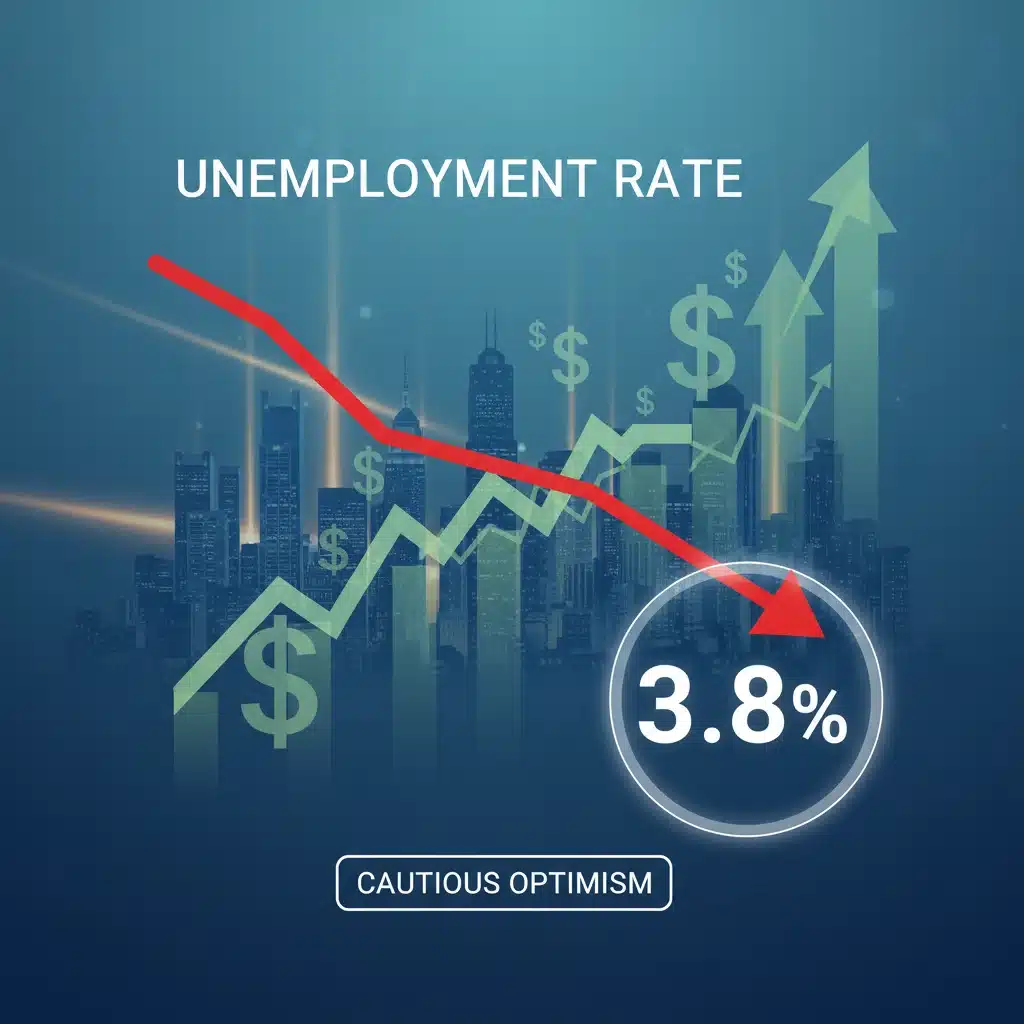
The latest economic data has sent ripples through financial markets and policy-making circles alike: the US unemployment rate has fallen to an impressive 3.8% in February 2026. This significant drop, a key indicator of a robust labor market, has ignited both optimism and debate regarding the future trajectory of the American economy. While a low unemployment rate is generally a sign of economic health, this particular figure, coming at this specific juncture, brings with it a complex set of implications that demand closer examination. Understanding the nuances of this development is crucial for businesses, investors, and policymakers as they navigate the evolving economic landscape.
Understanding the Latest US Unemployment Rate Data
The Bureau of Labor Statistics (BLS) reported that the US unemployment rate declined to 3.8% in February 2026, a notable decrease from previous months. This figure represents a near return to pre-pandemic lows, signaling a labor market that continues to defy expectations of a significant slowdown. The report highlighted strong job gains across various sectors, with particular strength observed in services, healthcare, and technology. This widespread growth suggests that the economic recovery, despite global headwinds, has maintained its momentum on the domestic front.
Delving deeper into the data, several factors contribute to this positive outlook. The labor force participation rate, while not reaching historic highs, showed a steady increase, indicating that more individuals are entering or re-entering the workforce. This is a critical metric, as a low unemployment rate coupled with declining participation can mask underlying weaknesses. In this case, the rising participation suggests that opportunities are abundant enough to draw people back into employment. Furthermore, the average hourly earnings continued to show moderate growth, which is a double-edged sword. While it provides consumers with increased purchasing power, it also fuels concerns about inflationary pressures, a topic we will explore in detail.
The decline in the US unemployment rate is not uniform across all demographics. While overall figures are strong, disparities persist. For instance, unemployment rates for certain minority groups, though improved, may still lag behind the national average. Similarly, educational attainment plays a role, with individuals holding higher degrees generally experiencing lower unemployment. These nuances are important for policymakers to consider when formulating targeted interventions to ensure an equitable economic recovery. The BLS report also detailed the reasons for unemployment, with a significant portion attributed to voluntary job changes, a sign of worker confidence and the availability of better opportunities.
Key Drivers Behind the February 2026 Drop
Several underlying forces have converged to push the US unemployment rate down to 3.8%. Firstly, sustained consumer demand has continued to drive business expansion. Despite inflationary pressures and higher interest rates, consumers have demonstrated remarkable resilience, supported by accumulated savings and a relatively strong wage growth. This demand translates directly into increased hiring across various industries, from retail to hospitality and manufacturing.
Secondly, businesses have shown a strong willingness to invest and expand, fueled by a desire to meet this consumer demand and capitalize on technological advancements. Supply chain disruptions, which plagued the economy in previous years, have largely eased, allowing companies to operate more efficiently and confidently. This improved operational environment encourages businesses to add to their payrolls, further tightening the labor market.
Thirdly, government spending and infrastructure projects, initiated in prior years, are now reaching maturity, creating a significant number of jobs in construction, engineering, and related sectors. These long-term investments provide a stable foundation for job creation, insulating certain segments of the labor market from short-term economic fluctuations. The push towards green energy and digital transformation has also created new industries and job categories, requiring a skilled workforce and contributing to the overall decline in unemployment.
Finally, the demographic shifts within the workforce, including a gradual increase in the working-age population and the integration of new technologies that enhance productivity, have also played a role. The adaptability of the American workforce, coupled with ongoing training and upskilling initiatives, has allowed many to transition into new roles and sectors, reducing structural unemployment. These combined factors paint a picture of a dynamic economy successfully absorbing available labor.
Economic Implications of a 3.8% Unemployment Rate
A US unemployment rate of 3.8% is a significant economic benchmark, carrying a multitude of implications for various stakeholders. While it generally signifies a healthy economy, it also raises important questions about inflation, wage growth, and monetary policy. The interplay of these factors will dictate the economic environment for the foreseeable future.
Impact on Wage Growth and Inflation
One of the most immediate and closely watched implications of a low US unemployment rate is its effect on wage growth. In a tight labor market, employers often have to offer higher wages and better benefits to attract and retain talent. Indeed, the February 2026 report indicated continued, albeit moderate, wage increases. While beneficial for workers, sustained high wage growth can contribute to inflationary pressures. Businesses may pass on increased labor costs to consumers in the form of higher prices for goods and services, potentially creating a wage-price spiral.
Economists are closely monitoring whether the current wage growth is productivity-driven or purely a result of labor scarcity. If productivity is increasing in tandem with wages, the inflationary impact might be mitigated. However, if wage growth outpaces productivity gains, it could signal persistent inflation, making the Federal Reserve’s job of achieving price stability more challenging. The delicate balance between supporting worker incomes and controlling inflation is a central theme in current economic discourse.

Federal Reserve’s Monetary Policy Response
The low US unemployment rate places the Federal Reserve in a precarious position. Their dual mandate is to achieve maximum employment and price stability. With employment levels near their maximum, the focus inevitably shifts more heavily towards controlling inflation. The Fed has been aggressively raising interest rates in recent periods to cool down the economy and bring inflation back to its target of 2%. A persistently low unemployment rate, especially if accompanied by strong wage growth, might signal to the Fed that further tightening is necessary.
However, the Fed must tread carefully. Overtightening could push the economy into a recession, negating the positive gains in the labor market. The decision-making process involves a careful analysis of various economic indicators, including the Consumer Price Index (CPI), Producer Price Index (PPI), and other measures of inflation expectations. Markets will be keenly watching the Fed’s upcoming statements and actions for any indications of their strategy in light of the new unemployment data. The path to a ‘soft landing’ – bringing down inflation without triggering a recession – becomes narrower with each successive strong jobs report.
Consumer Spending and Business Investment
A low US unemployment rate generally translates into higher consumer confidence and increased spending. With more people employed and earning incomes, households are more likely to make discretionary purchases, contributing to economic growth. This positive feedback loop is crucial for businesses, as robust consumer demand encourages further investment and expansion. Businesses, seeing a healthy market for their goods and services, are more inclined to invest in new equipment, technology, and hiring, creating a virtuous cycle.
However, the effect is not entirely straightforward. While employment is high, persistent inflation can erode purchasing power, potentially dampening consumer enthusiasm over time. The balance between strong employment and manageable inflation is key to sustaining this positive trend in consumer spending and business investment. Companies will also be evaluating the cost of capital, influenced by the Fed’s interest rate decisions, when making investment choices. A strong labor market provides the foundation, but the broader economic environment determines the extent of its impact.
Sector-Specific Performance and Future Outlook
The overall US unemployment rate masks variations in performance across different sectors of the economy. A deeper dive reveals which industries are thriving and which might face challenges in the coming months. Understanding these sector-specific trends is essential for a comprehensive economic outlook.
Thriving Sectors and Emerging Trends
The February 2026 jobs report highlighted significant strength in several key sectors. The healthcare industry, driven by an aging population and advancements in medical technology, continued its robust hiring trend. Similarly, the technology sector, particularly in areas like artificial intelligence, cybersecurity, and cloud computing, showed strong job creation, reflecting ongoing digital transformation across industries. Professional and business services also experienced substantial growth, indicating a healthy demand for specialized expertise and consulting.
Manufacturing, surprisingly, also showed resilience, especially in high-tech manufacturing and areas related to renewable energy production. This suggests a re-shoring or near-shoring of certain production processes, coupled with investments in automation and advanced manufacturing techniques. The leisure and hospitality sector, which was severely impacted during the pandemic, has largely recovered, benefiting from renewed travel and entertainment demand. These thriving sectors are not only contributing to the low US unemployment rate but also shaping the future landscape of the American economy.
Potential Challenges and Vulnerabilities
Despite the overall positive picture, certain sectors and segments of the economy face potential vulnerabilities. Industries heavily reliant on discretionary consumer spending, especially those sensitive to higher interest rates like real estate and certain retail segments, could experience headwinds if economic growth slows or inflation persists. Small businesses, in particular, might struggle with rising labor costs and tighter credit conditions, even in a strong labor market.
Furthermore, the global economic environment remains a factor. Geopolitical tensions, supply chain disruptions in specific niches, and economic slowdowns in major trading partners could indirectly impact the US economy, even with a strong domestic labor market. The potential for technological displacement in certain routine jobs, while creating new opportunities elsewhere, could also lead to localized unemployment spikes if not managed effectively through retraining and education initiatives. Continuous monitoring of these vulnerabilities is crucial for maintaining economic stability.
The Broader Economic Outlook for 2026 and Beyond
The February 2026 US unemployment rate report is a critical piece of the puzzle in forecasting the broader economic outlook. While the immediate implications are largely positive for the labor market, the interplay with inflation and monetary policy will define the economic trajectory for the remainder of 2026 and into 2027.
Forecasting Economic Growth and Stability
With a robust labor market, economists are generally projecting continued, albeit moderate, economic growth for the US. The strength in employment provides a solid foundation for consumer spending, which is a major component of GDP. However, the pace of growth will likely be tempered by the Federal Reserve’s efforts to control inflation. Higher interest rates are designed to slow down economic activity, and while the aim is a ‘soft landing,’ there’s always a risk of overshooting and triggering a more significant slowdown.
Factors like global economic performance, energy prices, and the stability of financial markets will also play a crucial role. A stable and predictable policy environment, coupled with continued innovation and productivity gains, will be key to sustaining growth. The focus will be on achieving a balance where the economy can grow without reigniting persistent inflationary pressures, a challenge that requires adept policymaking and a degree of economic good fortune.
Potential Headwinds and Tailwinds
Looking ahead, several potential headwinds could challenge the otherwise positive outlook. Persistent inflation, if it proves more stubborn than anticipated, could force the Federal Reserve to maintain a tighter monetary policy for longer, increasing the risk of a recession. Geopolitical instability, particularly in key energy-producing regions, could lead to renewed spikes in energy prices, impacting both consumers and businesses. Domestic political uncertainties and policy gridlock could also hinder long-term investment and planning.
Conversely, several tailwinds could support continued economic expansion. Rapid advancements in artificial intelligence and other technologies could significantly boost productivity, allowing for non-inflationary growth. Continued government investment in infrastructure and green technologies could provide a steady stream of job creation and economic activity. A stabilization of global supply chains and a resurgence in global trade could also provide a boost to US exports and overall economic activity. The balance of these forces will ultimately determine the economic climate.
Conclusion: Navigating a Dynamic Economic Landscape
The drop in the US unemployment rate to 3.8% in February 2026 is undoubtedly a positive development, reflecting a resilient and dynamic labor market. It signals strong job creation and an economy that continues to provide opportunities for many Americans. However, this positive news comes with its own set of challenges, primarily concerning the persistent battle against inflation and the delicate balancing act faced by the Federal Reserve.
Businesses will need to continue adapting to a competitive labor market, potentially offering more attractive compensation and benefits to secure talent. Consumers, while benefiting from job security, will need to remain mindful of inflationary pressures on their purchasing power. Policymakers face the complex task of guiding the economy towards sustained growth and price stability without stifling the current momentum. The coming months will be critical in determining whether the US economy can successfully navigate these complexities and achieve a truly balanced and sustainable expansion.
The February 2026 jobs report serves as a powerful reminder that economic indicators are rarely standalone figures. They are interconnected threads in a larger tapestry, each influencing and being influenced by others. A low US unemployment rate is a cause for optimism, but it also necessitates vigilance and strategic foresight from all economic actors to ensure long-term prosperity. The journey through 2026 will be one of careful calibration, balancing the strengths of the labor market with the imperative of price stability, ultimately shaping the economic narrative for years to come.