Navigating the 2026 Job Market: Higher Education Alignment for Future Success
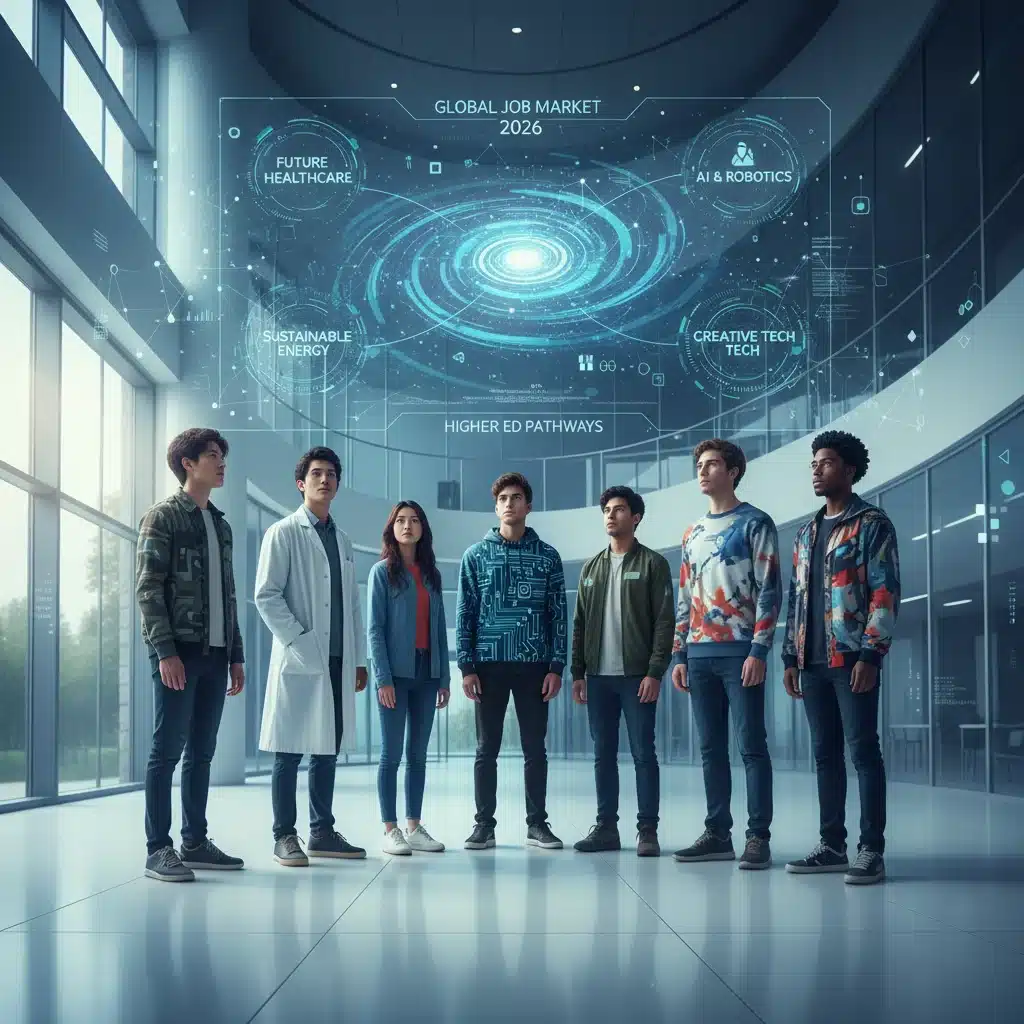
Navigating the 2026 Job Market: Higher Education Alignment for Future Success
The year 2026 might seem like a distant future, but in the rapidly evolving landscape of employment and technological advancement, it’s just around the corner. For students, educators, and professionals alike, understanding the trajectory of the 2026 job market education landscape is not just beneficial—it’s critical. The decisions made today regarding higher education will profoundly impact career prospects and professional resilience in the coming years. This comprehensive guide delves into the anticipated shifts, key industries, and essential skills that will define the 2026 job market, offering insights on how higher education can best align itself to meet these future demands.
The Shifting Sands of the 2026 Job Market Education Landscape
The global economy is in a constant state of flux, driven by technological innovation, demographic changes, and evolving societal needs. The 2026 job market education scenario will be characterized by several overarching trends:
- Automation and AI Integration: Artificial intelligence and automation will continue to reshape industries, automating repetitive tasks and creating new roles that require human oversight, creativity, and critical thinking.
- Gig Economy Expansion: The rise of freelance, contract, and project-based work is set to continue, demanding adaptability, self-management, and specialized skills from individuals.
- Sustainability and Green Jobs: As climate change concerns intensify, there will be a significant surge in demand for professionals in renewable energy, environmental engineering, sustainable agriculture, and related fields.
- Digital Transformation Across Sectors: Every industry, from healthcare to manufacturing, will be increasingly digitized, requiring a workforce proficient in digital tools and data literacy.
- Aging Population and Healthcare Demands: An aging global population will place greater emphasis on healthcare services, elder care, and medical innovation, driving demand for skilled professionals in these areas.
- Global Connectivity and Remote Work: The normalization of remote and hybrid work models will foster a more globally connected workforce, necessitating cross-cultural communication and digital collaboration skills.
These trends are not merely predictions; they are already in motion, and higher education institutions must adapt their curricula and pedagogical approaches to prepare students for this dynamic future.
In-Demand Industries and Sectors for 2026
To strategically align higher education with future employment, it’s crucial to identify the industries poised for significant growth and demand. The 2026 job market education landscape will see particular buoyancy in:
- Technology and IT: This remains a cornerstone. Roles in AI development, machine learning engineering, cybersecurity, data science, cloud computing, and software development will be paramount. The demand for ethical AI specialists and human-AI interaction designers will also grow.
- Healthcare and Biotechnology: Beyond traditional roles, there will be an increased need for telehealth specialists, bioinformatics scientists, genetic counselors, medical robotics engineers, and personalized medicine experts.
- Renewable Energy and Sustainability: From solar and wind energy technicians to environmental policy analysts, urban planners focused on sustainable infrastructure, and specialists in circular economy models, this sector will be a major employer.
- Advanced Manufacturing and Robotics: The integration of robotics and smart technologies in manufacturing will create demand for automation engineers, robotics technicians, and professionals skilled in additive manufacturing (3D printing).
- Digital Marketing and E-commerce: As businesses increasingly operate online, experts in digital marketing, SEO, content strategy, e-commerce management, and user experience (UX) design will be vital.
- Education Technology (EdTech): With the ongoing evolution of learning models, there will be a sustained need for instructional designers, online learning specialists, and developers of adaptive learning platforms.
Understanding these growth areas allows students to make informed decisions about their majors and specializations, ensuring their higher education choices are future-proof.
Essential Skills for the 2026 Job Market
While specific technical skills are crucial, the 2026 job market education paradigm also emphasizes a set of “power skills” or “soft skills” that are transferable across industries and resistant to automation. Higher education must foster a blend of both.
Core Technical Skills:
- Data Literacy and Analytics: The ability to collect, interpret, and make data-driven decisions will be indispensable. This includes proficiency in statistical analysis, data visualization, and understanding big data frameworks.
- Artificial Intelligence and Machine Learning Basics: Even for non-specialists, a foundational understanding of AI principles, its applications, and ethical implications will be highly valued.
- Cybersecurity Fundamentals: With increasing digital threats, basic cybersecurity awareness and best practices will be a requirement for most roles.
- Digital Collaboration Tools: Proficiency in platforms for virtual meetings, project management, and cloud-based document sharing is essential for effective remote and hybrid work.
- Cloud Computing: Understanding cloud infrastructures and services (e.g., AWS, Azure, Google Cloud) will be increasingly important as more operations shift to the cloud.

Crucial Power Skills:
- Critical Thinking and Problem-Solving: The ability to analyze complex situations, identify root causes, and develop innovative solutions will differentiate human workers from AI.
- Creativity and Innovation: As routine tasks become automated, the demand for creative thinking, idea generation, and novel approaches will soar.
- Adaptability and Lifelong Learning: The pace of change requires individuals to continuously learn new skills and adapt to evolving technologies and work environments. Higher education should instill a love for continuous learning.
- Emotional Intelligence and Empathy: Understanding and managing one’s own emotions, as well as recognizing and influencing the emotions of others, is vital for effective teamwork and leadership.
- Communication and Collaboration: Clear, concise, and persuasive communication, both written and verbal, alongside the ability to work effectively in diverse teams, will remain paramount.
- Digital Fluency and Media Literacy: Beyond basic computer skills, this involves understanding how digital information is created, disseminated, and consumed, and critically evaluating its sources.
Higher education institutions that integrate the development of these skills across all disciplines will produce graduates better equipped for the 2026 job market education challenges.
Aligning Higher Education with Future Employment Needs
For higher education to remain relevant and valuable, it must proactively adapt. Here’s how institutions and individuals can align for success:
For Educational Institutions:
- Curriculum Modernization: Regularly update course content to reflect current industry demands and future trends. Incorporate modules on AI ethics, data privacy, sustainable practices, and digital entrepreneurship.
- Interdisciplinary Programs: Encourage cross-departmental collaboration to create programs that blend technology with humanities, business with environmental science, or arts with data analytics. This fosters holistic problem-solving.
- Experiential Learning: Emphasize internships, co-op programs, capstone projects with industry partners, and simulations. “Learning by doing” provides practical experience and helps students develop job-ready skills.
- Focus on “Skills-First” Education: While degrees are important, employers are increasingly looking for specific skills. Institutions should clearly articulate the skills graduates acquire and offer micro-credentials or certifications for specialized competencies.
- Faculty Development: Provide ongoing training for faculty to stay abreast of technological advancements and evolving pedagogical methods. Encourage industry sabbaticals or collaborations.
- Leverage Technology in Teaching: Integrate AI-powered learning tools, virtual reality for simulations, and online collaboration platforms into the learning experience to mirror future work environments.
- Career Services Redefined: Shift from traditional job placement to comprehensive career coaching that includes personal branding, networking strategies, and guidance on navigating the gig economy and continuous upskilling.
For Students and Professionals:
- Strategic Major Selection: Research projected job growth for various fields. Consider double majors or minors that combine technical skills with broader critical thinking or communication skills.
- Embrace Lifelong Learning: Formal education is just the beginning. Plan for continuous upskilling and reskilling through online courses, certifications, workshops, and self-study.
- Develop a “T-Shaped” Skillset: Aim for deep expertise in one or two areas (the vertical bar of the ‘T’) combined with broad foundational knowledge across multiple disciplines (the horizontal bar).
- Networking and Mentorship: Build connections with professionals in your desired fields. Mentors can provide invaluable guidance and insights into industry trends.
- Build a Digital Portfolio: Showcase your skills and projects online. For many roles in the 2026 job market education landscape, a strong portfolio can be more impactful than a traditional resume.
- Cultivate “Future-Proof” Skills: Actively work on developing critical thinking, creativity, adaptability, and emotional intelligence. These are skills that AI cannot easily replicate.
- Consider Global Opportunities: The rise of remote work opens doors to international roles. Developing cross-cultural communication skills and potentially learning a second language can be advantageous.
The Role of Government and Industry in Shaping the Future Workforce
Preparing for the 2026 job market education challenge is not solely the responsibility of individuals and educational institutions. Governments and industries have a crucial role to play:
- Policy Support: Governments can invest in STEM education, provide incentives for apprenticeships, fund research into emerging technologies, and create policies that support workforce retraining and upskilling initiatives.
- Industry-Academia Partnerships: Closer collaboration between businesses and universities can ensure that curricula are directly relevant to industry needs. This includes co-developing courses, offering internships, and sponsoring research projects.
- Data Sharing and Forecasting: Industries can share data on skill gaps and future hiring needs with educational institutions, allowing for more accurate program development.
- Promoting Digital Inclusion: Ensuring equitable access to technology and digital literacy training for all segments of the population is vital to prevent a widening skills gap.
- Ethical Frameworks: As AI and automation become more prevalent, ethical considerations surrounding job displacement, data privacy, and algorithmic bias will become more prominent, requiring thoughtful discussion and regulation within the 2026 job market education context.
A concerted effort from all stakeholders will create a more robust and adaptable workforce for the future.
Case Studies: Successful Adaptations for the Future Job Market
To illustrate the practical application of these strategies, let’s consider a few hypothetical examples demonstrating how individuals and institutions are preparing for the 2026 job market education demands:
Case Study 1: The "Data-Savvy Humanities Graduate"
Maria, a student passionate about history, recognized the evolving nature of the 2026 job market education. Instead of pursuing a purely traditional history degree, she opted for a dual major in History and Data Science. Her history courses honed her critical thinking, research, and narrative skills, while her data science courses provided her with the analytical tools to interpret large datasets. For her capstone project, she used historical archives and machine learning algorithms to analyze long-term societal trends. Upon graduation, she secured a role as a "Cultural Data Analyst" for a museum, a position that didn’t exist five years prior, showcasing the power of interdisciplinary skills.
Case Study 2: "The Upskilling Engineer"
John, a mechanical engineer with 15 years of experience, noticed the increasing integration of AI in manufacturing. Realizing his skills might become obsolete, he enrolled in a series of online micro-credentials focusing on industrial automation, robotics programming, and AI ethics. His employer, recognizing the value of continuous learning, partially subsidized his training. John is now leading a team implementing AI-driven predictive maintenance systems, demonstrating how experienced professionals can successfully reskill to stay relevant in the 2026 job market education.
Case Study 3: "University of Future Skills"
A fictional "University of Future Skills" completely revamped its curriculum. They abolished rigid departments, creating "learning pathways" focused on future-oriented challenges like "Sustainable Cities," "Human-AI Collaboration," and "Personalized Health." Each pathway integrated technical skills (e.g., urban planning software, AI development, bioinformatics) with power skills (e.g., ethical reasoning, community engagement, interdisciplinary teamwork). They partnered extensively with local industries for project-based learning and offered guaranteed internships. Their graduates consistently report high employment rates in emerging fields, proving the effectiveness of a forward-thinking approach to 2026 job market education.

Challenges and Considerations for the Future
While the outlook for the 2026 job market education is promising for those who adapt, several challenges must be addressed:
- Equity and Access: Ensuring that everyone, regardless of socioeconomic background, has access to quality education and training for future jobs is paramount. The digital divide could exacerbate existing inequalities.
- Speed of Change: The rapid pace of technological advancement means that educational institutions must be agile and responsive, which can be difficult for large, traditional organizations.
- Funding for Innovation: Investing in new technologies, faculty development, and interdisciplinary programs requires significant financial resources.
- Psychological Impact: The constant need for upskilling and the fear of job displacement can lead to stress and anxiety. Support systems for mental well-being and career transitions will be increasingly important.
- Ethical Dilemmas: As AI and automation become more sophisticated, ethical considerations surrounding job displacement, data privacy, and algorithmic bias will become more prominent, requiring thoughtful discussion and regulation within the 2026 job market education context.
Addressing these challenges proactively will be crucial for creating a fair, inclusive, and thriving future workforce.
Conclusion: Preparing for a Dynamic Future
The 2026 job market education paradigm demands a proactive and adaptive approach from all stakeholders. For individuals, it means embracing lifelong learning, cultivating a blend of technical and power skills, and strategically choosing educational pathways that align with future growth sectors. For higher education institutions, it necessitates a fundamental shift towards more agile, interdisciplinary, and experiential learning models. Governments and industries must collaborate to create supportive ecosystems that foster innovation, provide resources for retraining, and ensure equitable access to future opportunities.
The future of work is not a fixed destination but an evolving journey. By understanding the trends, identifying the in-demand skills, and aligning higher education with these insights, we can collectively build a workforce that is not only resilient but also capable of thriving in the dynamic and exciting 2026 job market education landscape and beyond. The time to prepare is now, ensuring that today’s educational investments translate into tomorrow’s career successes.
Author