
Social Security 2026: What Retirees Need to Know for a Secure Future
As we inch closer to 2026, many current and future retirees are understandably focused on one crucial question: What will happen to Social Security? The landscape of retirement benefits is constantly evolving, influenced by economic factors, legislative discussions, and demographic shifts. Understanding the potential changes and what to expect from Social Security 2026 is paramount for effective financial planning and ensuring a comfortable retirement.
Social Security remains a cornerstone of financial security for millions of Americans. For retirees, it often represents a significant, if not primary, source of income. Therefore, any adjustments, whether to cost-of-living allowances (COLAs), eligibility requirements, or the broader funding model, can have profound implications. This comprehensive guide will delve into the anticipated outlook for Social Security 2026, providing insights into potential COLA projections, eligibility considerations, and the ongoing discussions surrounding the program’s long-term solvency.
Navigating the complexities of Social Security requires up-to-date information and a proactive approach. Our aim is to equip you with the knowledge needed to make informed decisions about your retirement strategy, helping you understand how changes in Social Security 2026 might impact your personal financial situation. From understanding the nuances of how benefits are calculated to exploring strategies for maximizing your Social Security income, we’ll cover the essential aspects that every retiree and near-retiree should be aware of.
Understanding the Cost-of-Living Adjustment (COLA) for Social Security 2026
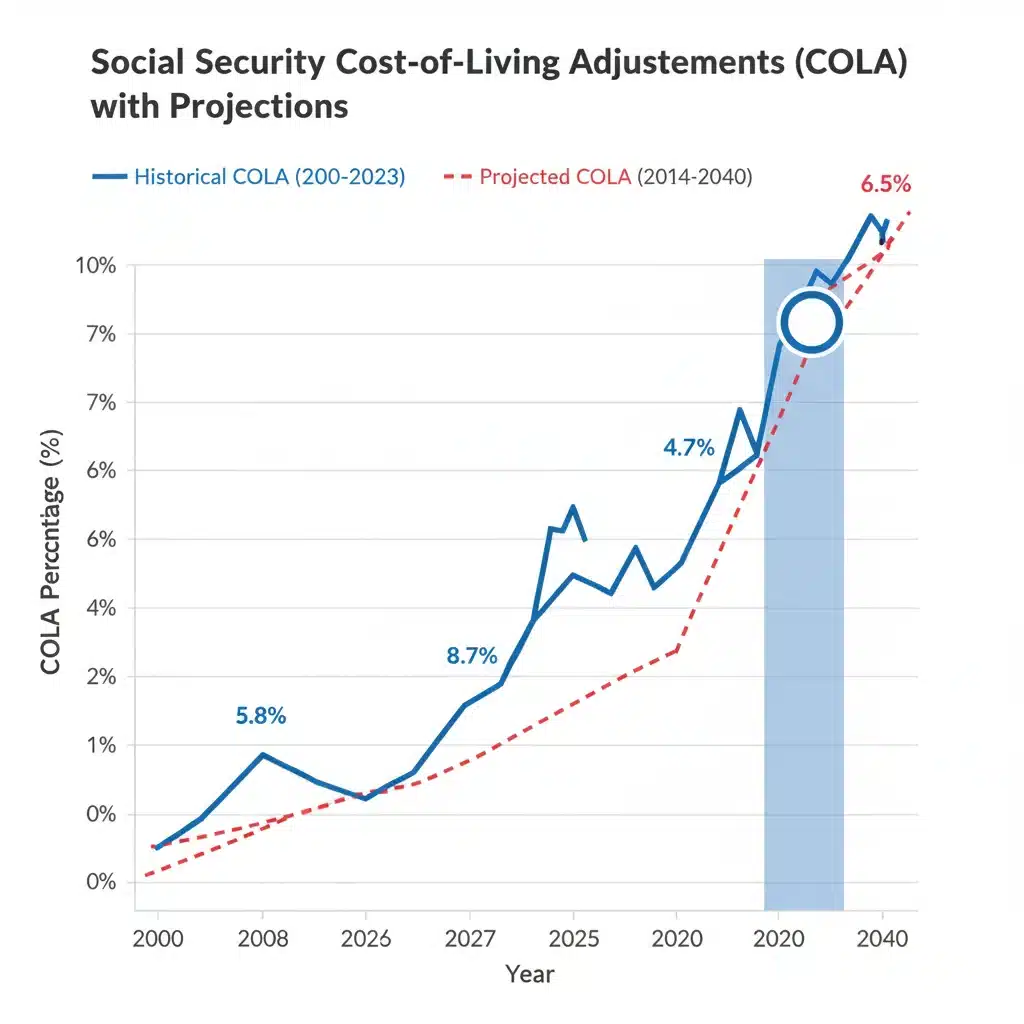
One of the most anticipated announcements each year for Social Security beneficiaries is the Cost-of-Living Adjustment, or COLA. This adjustment is designed to help Social Security benefits keep pace with inflation, ensuring that the purchasing power of retirees’ income is not eroded over time. The COLA for Social Security 2026 will be determined by inflation data from the third quarter of 2025, specifically using the Consumer Price Index for Urban Wage Earners and Clerical Workers (CPI-W).
While it’s too early to provide an exact figure for the Social Security 2026 COLA, we can analyze current economic trends and historical patterns to make educated projections. Factors such as energy prices, food costs, and broader economic growth all play a significant role in determining the CPI-W. Economists and financial analysts regularly release their forecasts, which can offer a preliminary glimpse into what retirees might expect. A higher inflation rate typically translates to a larger COLA, while subdued inflation would result in a smaller adjustment.
It’s important to remember that the COLA is not guaranteed to be positive every year, although it has been in most recent years. The calculation method is straightforward: the average CPI-W for the third quarter of the current year is compared to the average CPI-W for the third quarter of the last year in which a COLA was payable. The percentage increase, if any, becomes the COLA for the following year. For Social Security 2026, this means comparing Q3 2025 data to Q3 2024 data.
Beneficiaries should also be aware that while COLA increases help maintain purchasing power, they can also sometimes lead to increases in Medicare Part B premiums, which are often deducted directly from Social Security benefits. This interaction is crucial to consider when evaluating the net impact of the COLA on your overall retirement income. Keeping an eye on inflation reports throughout 2025 will be key to anticipating the Social Security 2026 COLA.
Eligibility and Benefit Calculation Updates for Social Security 2026
Beyond the COLA, understanding the eligibility requirements and how benefits are calculated is fundamental for anyone planning their retirement, especially as we look towards Social Security 2026. While the core rules for earning Social Security credits and determining your full retirement age (FRA) are relatively stable, certain parameters are adjusted annually.
Full Retirement Age (FRA)
Your full retirement age (FRA) is the age at which you are entitled to receive 100% of your primary insurance amount (PIA). For individuals born in 1960 or later, the FRA is 67. This threshold is not expected to change for Social Security 2026, meaning that individuals turning 67 in 2026 will reach their FRA in that year. Claiming benefits before your FRA results in a permanent reduction, while delaying beyond your FRA (up to age 70) can lead to increased benefits through delayed retirement credits.
Earnings Limit for Beneficiaries
For those who claim Social Security benefits before their FRA and continue to work, an earnings limit applies. If your earnings exceed this limit, a portion of your benefits will be withheld. The earnings limit is typically adjusted each year based on changes in the national average wage index. For Social Security 2026, we can anticipate an increase in this earnings limit, allowing beneficiaries to earn more without their benefits being reduced. Once you reach your FRA, the earnings limit no longer applies, and you can earn any amount without affecting your Social Security payments.
Maximum Taxable Earnings
The maximum amount of earnings subject to Social Security taxes (the Social Security wage base) also changes annually. This figure is crucial because it affects how much high earners contribute to the system and, consequently, how their future benefits are calculated. An increase in the maximum taxable earnings for Social Security 2026 would mean that higher-income workers would pay Social Security taxes on a larger portion of their income, potentially leading to higher future benefits for them.
Benefit Calculation Basics
Your Social Security benefit amount is primarily based on your highest 35 years of indexed earnings. These earnings are adjusted for changes in the national average wage level over time. The Social Security Administration (SSA) then applies a formula to these indexed earnings to determine your primary insurance amount (PIA). Understanding this calculation is essential, as it underscores the importance of consistent work history and earnings throughout your career. For Social Security 2026, while the fundamental formula remains, the indexing factors will be updated to reflect economic conditions.
The Financial Health of Social Security and Potential Reforms for 2026 and Beyond
The long-term solvency of Social Security is a perennial topic of discussion, and these conversations often intensify as we approach key years like Social Security 2026. The program faces demographic challenges, primarily an aging population and lower birth rates, which mean fewer workers are contributing for each retiree receiving benefits. According to the latest Trustees’ Report, the Social Security trust funds are projected to be able to pay 100% of promised benefits until the mid-2030s, after which they would only be able to pay a reduced percentage if no legislative action is taken.
While the program is not facing imminent collapse, the projected shortfall has spurred ongoing debates about potential reforms. These discussions could influence the program’s structure and benefits even by Social Security 2026, though major legislative changes typically take time to implement. Some of the frequently discussed reform options include:
- Raising the Full Retirement Age (FRA): Gradually increasing the FRA beyond 67 is a common proposal to align with increased life expectancies.
- Adjusting the COLA Formula: Modifying how the COLA is calculated, perhaps by using a different inflation index (e.g., the Chained CPI), could result in smaller annual increases.
- Increasing the Social Security Tax Rate: A small increase in the FICA tax rate paid by workers and employers could significantly improve the program’s financial outlook.
- Raising the Maximum Taxable Earnings: Eliminating or substantially increasing the cap on earnings subject to Social Security taxes would require higher earners to contribute more.
- Means-Testing Benefits: Introducing a system where higher-income retirees receive reduced benefits, though this is often controversial.
It’s important for retirees and future beneficiaries to stay informed about these discussions. While no drastic changes are definitively slated for Social Security 2026, the political climate and economic pressures could accelerate or alter legislative efforts. Understanding these potential reforms allows for better preparation and adaptation of personal financial plans.
Maximizing Your Social Security Benefits for 2026 and Beyond
Regardless of potential future changes, there are proactive steps you can take to maximize your Social Security benefits. Strategic planning can significantly impact your retirement income, especially with an eye on factors influencing Social Security 2026.
Delaying Claiming Age
One of the most impactful strategies is to delay claiming your benefits beyond your earliest eligibility age (62) and, ideally, up to your full retirement age (FRA) or even age 70. For every year you delay claiming past your FRA, your benefit amount increases by a certain percentage, known as delayed retirement credits, up to age 70. This can result in a significantly larger monthly payment for the rest of your life. For someone reaching FRA in Social Security 2026, delaying even for a year or two could mean thousands of dollars more annually.
Reviewing Your Earnings Record
Your Social Security benefit is based on your 35 highest earning years. It’s crucial to regularly review your Social Security earnings record through your My Social Security account. Ensure that all your earnings are accurately reported. Discrepancies could lead to lower benefits, and correcting errors can take time. Catching and rectifying any mistakes well before you plan to claim benefits (e.g., in the run-up to Social Security 2026) is highly recommended.
Coordinating Spousal Benefits
For married couples, coordinating when each spouse claims benefits can be a powerful strategy. There are various claiming strategies, such as ‘file and suspend’ (though largely phased out, some exceptions exist for those born before specific dates) or ‘restricted application’ (also phased out for those born after a certain date), that were designed to maximize combined household benefits. While these specific strategies have changed, understanding spousal and survivor benefits remains critical. A financial advisor specializing in Social Security can help couples navigate these options effectively, considering their unique circumstances and how they relate to the Social Security 2026 rules.
Understanding Taxation of Benefits
It’s also important to remember that a portion of your Social Security benefits may be taxable, depending on your ‘provisional income’ (adjusted gross income + tax-exempt interest + one-half of your Social Security benefits). Understanding these thresholds and how they might affect your net income is a key part of retirement planning, especially as you project your income for Social Security 2026 and beyond. This knowledge can help you make informed decisions about other retirement withdrawals, such as from 401(k)s or IRAs.

The Impact of Economic Trends on Social Security 2026
The broader economic environment plays a critical role in shaping the outlook for Social Security 2026. Key economic indicators directly influence the program’s finances and the benefits retirees receive.
Inflation Rates
As discussed, inflation is the primary driver of the annual COLA. Persistent high inflation leads to larger COLAs, which can be a double-edged sword. While it increases benefit payments, it also reflects a higher cost of living that retirees must contend with. Conversely, low inflation might result in minimal COLA increases, potentially eroding purchasing power if other costs rise independently. Monitoring inflation forecasts for 2025 will be crucial for predicting the Social Security 2026 COLA.
Wage Growth
Wage growth directly impacts the Social Security program’s revenues. When wages rise, workers and their employers contribute more in FICA taxes, strengthening the trust funds. Strong wage growth also influences the calculation of the maximum taxable earnings limit and the national average wage index, which affects future benefit amounts. Robust wage growth leading up to Social Security 2026 would be a positive sign for the program’s financial health.
Interest Rates
Interest rates affect the Social Security trust funds’ ability to earn returns on their invested reserves. Higher interest rates can lead to greater earnings for the trust funds, providing a buffer against future shortfalls. While not as direct an impact as wage growth or inflation, the interest rate environment can subtly influence the program’s long-term solvency discussions, potentially affecting the urgency of reforms by Social Security 2026.
Employment Levels
A strong job market with high employment levels means more people are contributing to Social Security through payroll taxes. Conversely, high unemployment reduces the number of contributors, placing greater strain on the system. The health of the job market in the years leading up to Social Security 2026 will be a significant factor in the program’s financial standing.
Planning Your Retirement Around Social Security 2026
Given the various factors influencing Social Security 2026, a comprehensive retirement plan is more important than ever. Social Security should be viewed as one component of a multi-faceted financial strategy, not the sole source of retirement income.
Diversify Your Retirement Savings
Relying solely on Social Security can be risky. It’s essential to diversify your retirement savings through vehicles like 401(k)s, IRAs, personal savings, and other investments. This diversification provides a cushion against potential changes in Social Security benefits and offers greater financial flexibility. As you plan for Social Security 2026, assess your current savings and consider if they are on track to support your desired lifestyle.
Consult a Financial Advisor
A qualified financial advisor can provide personalized guidance tailored to your specific situation. They can help you understand the intricacies of Social Security, project your future benefits, and integrate them into your overall retirement plan. An advisor can also help you navigate potential changes, such as those anticipated for Social Security 2026, and adjust your strategies accordingly.
Stay Informed
The Social Security Administration (SSA) is the official source for accurate information. Regularly check their website, review your annual Social Security statement, and pay attention to official announcements regarding COLAs and other program updates. Staying informed about the latest developments concerning Social Security 2026 will empower you to make timely and effective financial decisions.
Consider Your Health and Longevity
Your health and projected longevity should also factor into your Social Security claiming decision. If you anticipate a long lifespan, delaying benefits to maximize your monthly payment can be highly beneficial. Conversely, if health issues suggest a shorter lifespan, claiming earlier might be a more suitable option. These personal considerations are critical in optimizing your Social Security strategy for Social Security 2026 and beyond.
The Future Outlook: Beyond Social Security 2026
While our primary focus is on Social Security 2026, it’s prudent to consider the longer-term outlook for the program. The discussions around solvency and reform are ongoing, and it’s highly probable that some form of legislative action will be taken in the coming years to ensure the program’s financial stability for future generations. These potential reforms could involve a combination of revenue increases and benefit adjustments, designed to spread the impact across different demographics.
The political will to address Social Security’s long-term challenges is often influenced by election cycles and public sentiment. However, the demographic realities are undeniable, and policymakers will eventually need to reach a consensus. For retirees, this underscores the importance of not becoming overly reliant on Social Security as their sole source of income. A diversified retirement portfolio and a flexible financial plan are the best defenses against future uncertainties.
The strength of Social Security lies in its adaptability and its fundamental role in American society. While adjustments may be necessary, the program has a long history of evolving to meet the needs of its beneficiaries. By understanding the current state of affairs, anticipating the changes for Social Security 2026, and planning proactively, retirees can navigate the future with confidence and maintain their financial security.
Conclusion: Preparing for Social Security 2026
The outlook for Social Security 2026 presents a mix of predictable adjustments and ongoing discussions about the program’s future. While the annual Cost-of-Living Adjustment will be a key factor in determining retirees’ income, understanding the broader context of eligibility rules, benefit calculations, and potential reforms is equally vital. The program remains a critical safety net, but proactive engagement with your personal finances and staying informed about Social Security developments are essential for a secure retirement.
By reviewing your earnings record, considering optimal claiming strategies, and diversifying your retirement savings, you can build a robust financial plan that accounts for the nuances of Social Security 2026. Consulting with financial professionals and staying abreast of economic trends and legislative debates will empower you to make the best decisions for your financial well-being. Ultimately, a well-informed and proactive approach is your best asset in navigating the evolving landscape of Social Security and securing your retirement future.